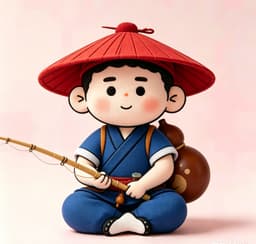
Bijian
“You never lean on others — that alone is your strength.”
You were never one to lean. Early on, you learned that the surest ground is the one you build yourself — and so you became your own shelter, your own counsel, your own quiet champion.
- Self-possession that doesn't waver under pressure
- A loyalty so steady it becomes a kind of gravity
- The rare ability to be alone without being lonely
- You carry burdens alone that were never meant to be yours
- Independence can harden into isolation without you noticing
- You forget that asking for help is not the same as needing rescue
In love you are an equal, never a dependent. You love steadily, without clinging — which some mistake for distance. The partner who understands that your space is not rejection will find a devotion that never wavers.
You thrive where autonomy is real — your own practice, your own projects, your own pace. Collaboration works only when it respects your independence; otherwise, you'll quietly do it all yourself and quietly burn out.
Stories that sound like you.
You learned early that the only person you can always count on is yourself. Not because no one offered — people have, plenty of times — but because you never wanted to owe anyone. There's a particular kind of freedom in not being in anyone's debt, and you built your whole life around it. Your own shelter, your own way, your own strength. Quietly, without complaint, you became the person others lean on. And it works. It's worked for years. But there's a cost to it you rarely admit: never leaning means never being caught. You've gotten so good at holding yourself up that you've forgotten what it feels like to let someone else take the weight for even a moment. In the Ten Gods, this is Bi Jian (比肩) — the energy of independence and self-reliance. It is the part of the chart that stands on its own two feet, refuses to be a burden, and takes fierce pride in making its own way. It is a quiet, unshakable strength. But its shadow is pride disguised as independence — the belief that needing someone is the same as being weak. The reframe: asking for help isn't weakness. It's not a debt, and it doesn't make you less self-sufficient. The people who love you are not keeping score, waiting to collect. They're waiting for the chance to catch you — and you keep denying them the gift of being useful to you. So let someone lean you back, just once. It'll feel wrong at first, like speaking a language you only ever hear. Stay with it. Independence and connection aren't opposites — the strongest people are the ones who can stand alone and still let themselves be held. You've proven you don't need anyone. Now prove you can let someone in anyway.
You're slow to trust, and slower to call someone a friend. You don't hand out your loyalty like a sample — it has to be earned, over time, through proof. And because it's so hard to earn, the people who do have it get something most people will never see: a friend who shows up, keeps their word, and stays, no matter what. Once someone is in, they're in for life. That kind of loyalty is rare, and you know it. You've also learned, the hard way, how much it can cost. Because you don't love casually, when you do let someone in, you let them all the way in — and when they break it, the wound goes deep and takes years to close. In the Ten Gods, Bi Jian (比肩) is the energy of the steadfast friend — the one who doesn't do surface, who values trust above charm, who would rather have three real people than a hundred acquaintances. This is a beautiful way to live. But it carries a caution: not everyone you let in will be worthy of the depth you give. The reframe: your loyalty is a treasure, and treasures deserve guarding. The lesson isn't to love less — it's to be more discerning about who gets the deepest version of you. Not everyone earns it back, and that's not a failure on your part. It's just the natural sorting of a world where most people are shallow and you are not. So guard your energy the way you guard your people. Keep your circle small and real. The few who make it in are the luckiest people you know — and you, in turn, deserve the same from them. Loyalty you can't buy is exactly the kind worth protecting, in both directions.
People watch you and call you a lone wolf. They assume you're lonely, maybe even a little sad, because you spend so much time on your own. But they're missing the truth: you're not lonely — you're at home in your own company. When it's quiet, you think more clearly. When no one needs anything from you, you recharge. Solitude isn't a punishment to you; it's a preference, a refuge, a place where you finally feel like yourself. There's a real peace in that, and you've earned it. But there's also a line you've been flirting with, and you know it. Because independence can quietly slide into isolation — the kind where you stop reaching out, stop letting people in, stop remembering that you were never meant to do this whole life alone. In the Ten Gods, Bi Jian (比肩) is deeply self-sufficient energy — it stands alone, thrives alone, and doesn't need the crowd to feel whole. This is genuine strength. But even the strongest tree needs its roots in the same soil as the others, and a lone wolf is still, at the end of the day, a wolf that was born for a pack. The reframe: you don't have to choose between your solitude and your people. The right person won't take your space — they'll stand in it with you, respecting the quiet while making it less empty. That's the thing you've been missing: not someone to fill the silence, but someone to share it. So let someone in now and then. Not all the way, not all at once — just enough to remember what it feels like to be known. You'll still have your solitude. You'll still be you. But you'll have one more reason to come back from the quiet, and that reason is worth the risk.
You've noticed it in yourself: the quiet comparisons, the silent scorekeeping. A friend gets promoted and something in you tightens. A peer achieves something and you feel a flicker of "I should be further along." You don't say it out loud — you're too proud for that. But underneath your composed exterior, there's a constant, low-grade competition running with everyone in your orbit. It's not jealousy, exactly. It's a drive — the same drive that makes you work hard and hold yourself to a high standard. You don't want to beat them; you just can't stand the thought of being behind them. And that fire has pushed you forward, but it's also kept you from ever feeling at rest. In the Ten Gods, Bi Jian (比肩) is the energy of peerhood and rivalry — it naturally compares itself to those on the same level, because equality is its native language. This is a real source of motivation. But comparison is a treadmill, and you've been running on it for years, always measuring, never quite arriving. The reframe: the only race you're in is with who you were yesterday. Your peers are not your yardstick — they're on their own path, with their own timing, their own hidden costs you can't see. Comparing your behind-the-scenes to their highlight reel is a rigged game, and you've been losing it on purpose. So redirect the fire. Instead of measuring yourself against them, measure yourself against your own last month. Did you grow? Did you show up? Did you keep your word to yourself? That's the only scoreboard that matters. Keep the drive — it's what makes you strong. Just stop pointing it at people who were never actually your rivals.
You have a deep, almost physical aversion to being in someone's debt. When someone does you a favor, you feel the weight of it until you've paid it back, usually with interest. When you're struggling, you hide it — because admitting you need help feels like handing someone a claim on you. You'd rather claw your way out of a hole alone than accept a hand that comes with strings. It's a kind of pride, and you've always thought of it as strength. And it is, partly — it's kept you honest, kept you self-sufficient, kept you from becoming the kind of person who takes without giving. But it's also built a wall, and the wall is keeping out the very help that could have made everything easier. In the Ten Gods, Bi Jian (比肩) prizes independence and equality above almost everything — it hates to owe, hates to be beneath, hates the imbalance that comes from needing. This is a noble instinct. But it rests on a false premise: that accepting help makes you lesser, that connection is a transaction, that every kindness comes with a ledger. The reframe: real help, from the people who love you, is not a debt — it's a gift, freely given, no strings attached. The people who offer it aren't keeping score; they're expressing love the only way they know how. By refusing it, you're not protecting your independence — you're rejecting their love. So let someone help you, without immediately calculating how to pay it back. Sit with the discomfort of being on the receiving end. You'll discover that accepting a hand doesn't make you weak — it makes you human, and it deepens the bond you were so afraid of damaging. Independence isn't about never needing anyone. It's about knowing you can, and choosing to lean anyway.
You're stubborn, and you know it. Not in the childish, tantrum way — in the quiet, immovable way. Once you've decided something is a matter of principle, no amount of pressure, persuasion, or practicality will move you. You'll dig in, hold the line, take the loss — because to you, bending feels like betraying yourself, and that's a price you've never been willing to pay. And it's cost you. The job you walked away from, the relationship that broke on the rock of your refusal, the opportunities that slipped by while you stood firm on a point that, in hindsight, maybe didn't matter as much as you thought. Your pride has kept you strong, and it has also kept you stuck. In the Ten Gods, Bi Jian (比肩) is deeply principled and immovable — it holds its ground, refuses to compromise its integrity, and would rather break than bend. There's real honor in that. But there's a difference between standing for something and being unable to flex, and the line between principle and rigidity is one you've crossed more than once. The reframe: bending on a method is not the same as bending on a value. You can hold your principles absolutely and still be flexible about how you live them out. The strongest steel is the kind that can flex under pressure and return to shape — the brittle kind shatters, and shattering has never once looked like strength. So ask yourself, next time you dig in: am I protecting a principle, or protecting my pride? The answer matters, because one is worth standing for and the other will cost you things you actually wanted. Hold your line when it's real. But learn to bend on the things that don't touch your core. That's not weakness. That's wisdom wearing a strong man's shape.
The people you call friends are not casual. They're the ones you've chosen, tested, and kept — the few who've proven, over years, that they're the real thing. And once someone crosses into that inner circle, you're theirs completely: you show up, you protect, you defend, you'd drop everything at 3 a.m. without a second thought. Your friends are your family in every way that matters, sometimes more than blood ever was. This is one of the truest, best things about you. But it also comes with a vulnerability you don't often admit: when someone from that inner circle betrays you, it doesn't just hurt — it breaks something. Because you gave them a loyalty most people will never give or receive, and the betrayal of that is a wound that never fully closes. In the Ten Gods, Bi Jian (比肩) is the energy of brotherhood and friendship — it values its people above almost everything, and it is fiercely, unwaveringly loyal. This is the rarest kind of wealth there is: people you can truly count on, and who can truly count on you. The reframe: your capacity for friendship is a gift, not a liability — even with the risk. The betrayal you fear is the price of the depth you're capable of, and it's a price worth paying, because the alternative — a life of shallow, guarded connections — is a far emptier kind of safety. So keep your people close, and keep being the friend you are. But let them earn their place, and let them keep it through their own loyalty. The ones who match your depth are worth more than gold. You already know this. Just remember to let yourself receive it back, too — you deserve the same devotion you so freely give.
You've never been good at taking orders. Not because you're lazy or rebellious — because something in you bristles at being controlled. The condescending boss, the friend who tries to run your life, the partner who wants you to be someone you're not — the moment someone tries to bend you to their will, your back goes up and you dig in. You'd rather walk than be managed. It's a kind of integrity, and it's kept you free. But it's also kept you out of rooms you might have thrived in. Because the modern world is full of structures that want you to fit a mold, and your refusal to fit has, more than once, cost you opportunities, relationships, and peace you might have had if you'd just learned to play along a little. In the Ten Gods, Bi Jian (比肩) is fiercely egalitarian energy — it will not be dominated, will not bow, will not accept a hierarchy it didn't choose. This is a strength: it means you'll never be a doormat, never lose yourself to someone else's idea of who you should be. But absolute refusal is also a cage, and you've been living in it. The reframe: you don't have to submit to keep your dignity. There's a difference between being managed and being led, between obeying and cooperating. The strongest people know when to push back and when to work within — because you can hold your autonomy and still function in a world that runs on coordination. So choose your battles. Not every authority figure is your enemy; not every structure is a prison. Some are just the scaffolding that lets you do your best work. Push back on what violates your values, and let the rest slide. You don't have to win every fight to stay free. Sometimes the freest thing is knowing which hills aren't worth dying on.
Nobody handed you anything. Whatever you have — the skills, the stability, the quiet respect — you built it yourself, brick by brick, with your own two hands. No safety net, no family name, no lucky break. Just you, showing up, working, refusing to quit, until the thing that started as nothing became something real and yours. And that's a particular kind of pride that no one who inherited their position will ever understand. It's the pride of the self-made — the knowledge, deep in your bones, that whatever happens, you can do it again, because you've already done it once from zero. In the Ten Gods, Bi Jian (比肩) is the energy of the self-made person — it relies on no one, builds from the ground up, and draws its strength from its own effort. This is one of the most powerful forces in the chart, because it's not a gift you were given — it's a capability you earned, and earned things can't be taken away. The reframe: your self-made strength is real, and it's yours forever. But don't let the pride of building alone become a refusal to ever build with anyone. The strongest builders eventually learn that some things — a home, a family, a life — are better built by two. Not because you need the help, but because some walls are meant to be shared. So keep the pride. You earned it. But leave a little room in the fortress you built for someone to stand beside you. You've proven you can do it alone. Now let yourself discover what's possible when you don't have to. The self-made person's final lesson isn't strength — it's trust.
You've always been the one who holds it together. The one who doesn't crack, doesn't lean, doesn't need. The one others come to for strength, because you seem to have an endless supply. And you've carried that role for so long — the strong one, the steady one, the one who can handle anything — that it's become the whole shape of who you are in the world. But there's a loneliness in it you don't often let yourself feel. Because the strong one doesn't get to be weak. The one who holds everyone up doesn't get to ask who's holding them. You've made yourself so self-sufficient that you've accidentally made yourself unreachable, and some nights you feel the weight of that more than you'd ever say. In the Ten Gods, Bi Jian (比肩) is the energy of quiet, unyielding strength — it stands alone, bears its own weight, and asks nothing of anyone. This is genuinely admirable. But strength that never admits a crack isn't strength — it's a wall, and walls keep everyone out, including the people who love you. The reframe: the strongest thing you can do is let someone see the weight. Not because you can't carry it — you've proven you can — but because you weren't meant to carry it alone. The people who love you don't need you to be invincible. They need you to be real, so they can finally reach you. So let the mask slip, just once, with someone who's earned it. Tell them you're tired. Let them see the crack. You'll find that being strong enough to show your weakness is a deeper strength than any you've been performing. And the loneliness you've been carrying? It starts to lift the moment you let someone in to share it.
“You don't need to become anyone — you are the standard.”
Bijian is the part of you that stands on your own. It is your self-reliance, your inner steadiness, your quiet confidence that does not need anyone's approval to exist. You are the person who is at ease alone — not lonely, but whole.
The Cognitive Awakening Course
“Know your energy. Awaken your life.”
You’ve met your archetype. Now learn to work with it — turn self-knowledge into a life you actually live.