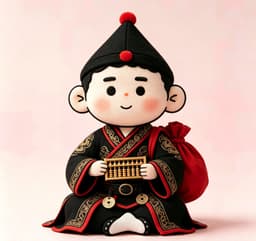
Jiecai
“You're hard on yourself, because you know exactly where you're going.”
You were forged with a fire in you — a drive that wakes you early and won't let you settle. You don't just want to succeed; you want to prove something, to yourself more than anyone.
- A drive that turns obstacles into fuel
- Decisiveness when others are still deliberating
- Fierce protection of the people you claim as your own
- The same fire that drives you can burn the bridges you need
- Competition is your language, but not everyone speaks it
- You measure yourself against others, then wonder why you feel exhausted
You love with intensity — all in, no half-measures. But passion without patience can scorch. Your lesson is to let the fire warm instead of burn: to compete with the world, never with the one you love.
You are built for arenas with stakes — where boldness wins and hesitation loses. Routine will suffocate you; give yourself something to conquer, or you'll make one up.
Stories that sound like you.
Something wakes you before the alarm — a restlessness, a need to prove it, to build it, to win it, to get up and do something with the day before the day gets away from you. It's been there as long as you can remember, this low, constant fire in your chest that won't let you sit still, won't let you coast, won't let you do anything halfway. People call you intense. You call it alive. Because to you, a life without that fire isn't a life at all — it's a waiting room. You'd rather burn bright and risk the fall than smolder quietly and never really live. And that intensity is the reason you've done things, felt things, become things that more careful people only ever watched from the sidelines. In the Ten Gods, this is Jie Cai (劫财) — the energy of raw drive and passion. It is the part of the chart that acts, competes, pushes, and refuses to settle. It lights up rooms. It also, sometimes, burns the people standing too close, because fire doesn't know its own heat until it sees the singe marks. The reframe: your fire is a gift, not a problem — but it needs aim. Unaimed fire is just a blaze; aimed fire is a forge. The difference is where you point it. At the work, at the goal, at the thing you're building — that's how a flame becomes warmth and light. At the people around you, in moments of heat — that's how it becomes ash and regret. So keep the fire. Never apologize for it. Just remember to check, in the hot moments, where it's pointing. You were born to burn bright. The goal isn't to dim yourself — it's to light the way, not the people. Aim it at the work, and you'll warm everyone you love without ever singeing them.
No one has to push you — you push yourself harder than any boss, coach, or critic ever could. Because you know exactly where you're going, and every wrong turn, every delay, every moment that falls short of what you expected feels like failure. You hold yourself to a standard that exists only in your own head, and you've never once met it, because the standard keeps moving the closer you get. And here's the part no one sees: the voice in your head is brutal. It says the things you would never dream of saying to anyone else — that you're behind, that you're not enough, that everyone else has figured it out and you're the only one still flailing. You'd never talk to a teammate that way. You'd never talk to a friend that way. But you talk to yourself that way, every single day. In the Ten Gods, Jie Cai (劫财) drives hard — it competes, it demands, it refuses to settle for less than everything. That drive has built your life. But a drive with no compassion becomes a whip, and you've been whipping yourself for years without ever asking if it's actually working. The reframe: you're not behind. You're measuring yourself with a ruler no one else can see, in a race no one else is running. The brutal voice isn't the truth — it's just fear with a megaphone. And you can learn to turn it down, the way you'd soften your tone for someone you actually loved. So try giving yourself the grace you'd give a teammate. Next time you fall short, say what you'd say to them: "that's okay, we go again tomorrow." It'll feel foreign at first. But you can't sprint forever on self-hatred. The people who go the farthest aren't the ones who push hardest — they're the ones who learned to push themselves without breaking themselves. You're worth that, too.
You'll let a lot slide when it's aimed at you. The slight, the unfairness, the person taking advantage of your good nature — you shrug it off, let it go, don't make a thing of it. But the moment someone comes for your people — your family, your friends, the ones you love — it's a completely different story. Something in you switches on, and you become a force no one saw coming. That fierceness is the truest thing about you. When it matters, when someone you love is on the line, you don't hesitate, don't calculate, don't think about the cost. You just step in front of them and fight. And the people who've seen it never forget it, because there's nothing in the world like having someone in your corner who would go to war for you. In the Ten Gods, Jie Cai (劫财) is the energy of fierce loyalty and protection — it fights for its people harder than it ever fights for itself. This is a rare and beautiful thing. But it has a shadow you rarely admit: you're so busy protecting everyone else that you never let anyone protect you. The reframe: you're someone's people too. The same fierce loyalty you give so freely — someone out there is trying to give it back to you, and you keep waving them off, insisting you can handle it alone. But you can't, and you shouldn't have to. Letting someone fight for you isn't weakness — it's the other half of the love you've been giving all along. So let them. The next time you're the one under attack, step back and let someone else step forward. You've earned it a hundred times over. The people who love you want the chance to be your protector the way you've always been theirs. Let them. That's what love looks like when it goes both ways.
You work hard, and the money comes in — and then it goes out, almost as fast as it arrived. Not on nothing, exactly. On the thing that caught your eye, on treating the people you love, on the impulse you justified in the moment and regretted by morning. You're not careless with money because you don't value it. You're careless with it because you value the feeling — the rush, the generosity, the aliveness — more than the number in the account. And so you live in this cycle: earn, spend, feel flush, feel the pinch, swear you'll change, repeat. You've had this conversation with yourself a hundred times, and it never sticks, because the part of you that spends isn't listening to the part of you that worries. In the Ten Gods, Jie Cai (劫财) is the energy of the spender and the gambler — it moves money fast, lives in the present, and values action and feeling over accumulation. This isn't a moral flaw; it's how you're wired. But wiring can be managed, and the cost of not managing it is a permanent state of financial instability that feeds the very stress you keep trying to outspend. The reframe: you don't need to become a miser — that would kill the spark that makes you you. You need a circuit breaker. One small, automatic action that happens before the impulse can: pay yourself first. Move a fixed amount out the day it arrives, before the spending can touch it. Not deprivation — protection. Think of it as setting aside money for the person you're going to be, the one you love as much as you love everyone else. So automate it, and let the rest be yours to enjoy. You were never meant to hoard. But a river with one strong bank can still flow wild and free. Keep the generosity, keep the aliveness. Just build the one bank that keeps the river from flooding your future.
When a friend is in trouble, you don't ask questions. You show up. You lend the money, give the ride, stay up late, drop everything, fight their battles like they were your own. It's not a strategy — it's an instinct, deeper than thought. Your people come first, always, and you've never once regretted it. Being there for them is the most real version of you there is. But there's a question that creeps in on the quiet nights, and you usually push it away before it can land: who's there for you? Because when you're the one drowning, the phone stays quiet. When you need the ride, the favor, the shoulder, the people you've carried for years are suddenly busy. And you tell yourself it's fine, that you don't need it — but you do, and you know you do. In the Ten Gods, Jie Cai (劫财) is boundless in its loyalty and generosity — it gives everything to its people, holds nothing back, and never keeps score. This is a beautiful quality. But its shadow is a one-way loyalty, giving to people who take, pouring into relationships that never pour back. The reframe: your loyalty is a treasure, and it deserves to be matched. The question isn't whether you should keep being the friend who walks through fire — it's whether the people you'd burn for would burn for you. Not everyone earns that. And you're allowed to notice the difference, and to redirect your fire accordingly. So look honestly at your circle. Who shows up when you're the one in trouble? Keep those people close — they're gold. And the ones who only ever call when they need something? You can love them and still stop setting yourself on fire to keep them warm. Your loyalty is the best thing about you. Give it to people who'd give it back.
You hate losing. Not just in the big things — in everything. The argument, the game, the negotiation, the casual disagreement about where to eat dinner. Something in you cannot let it go; you have to win, have to be right, have to come out on top. It's not malice — it's a fire that won't let you stand down, a pride that treats every surrender as a defeat of your whole self. And that fire has won you a lot. But it's also cost you things you didn't realize you were paying for. Relationships worn down by endless battles, friends who learned to just let you win rather than engage, people who love you but are tired of the fight. You've been winning arguments and losing people, and you're only now starting to feel the balance of it. In the Ten Gods, Jie Cai (劫财) is fiercely competitive energy — it wants to prevail, to prove, to never be the one who backed down. This is a genuine strength in the right arena. But a person who must win every interaction makes every interaction a war, and no one can live in a war zone forever, least of all the people you love. The reframe: not every conflict is a contest, and not every concession is a loss. The strongest people know which battles actually matter and let the rest go — not from weakness, but from the confidence that their worth doesn't hang on winning a fight about dinner. You are not your win record. So choose your battles. Keep the fire for the things that genuinely matter — the principles, the people, the stakes worth fighting for. And let the small stuff go, on purpose, and feel how much lighter it makes you. You'll still be the fierce competitor you've always been. You'll just stop turning your whole life into a tournament nobody else signed up for.
When an idea hits you, you don't sit on it. You move. You start the project that night, book the ticket on a Tuesday, quit the thing that's been holding you back without a backup plan. While other people are still making pros-and-cons lists, you're already three steps in, learning from the doing, figuring it out on the fly. And that boldness has opened doors that hesitation would have left locked forever. But it's also burned you. The leap you took without checking the landing, the money you committed without reading the fine print, the yes you gave before you knew what you were agreeing to. Your courage is real, but courage without a glance at the ground is just falling with style, and you've got the scars to prove it. In the Ten Gods, Jie Cai (劫财) is the energy of action and impulse — it moves first, thinks fast, and refuses to be paralyzed by what-ifs. This is a superpower. But impulse without a single beat of check is the difference between bold and reckless, and the line between them has cost you more than once. The reframe: you don't have to stop leaping — you just have to glance down first. One breath, one quick scan, one honest answer to "what's the worst that happens if I'm wrong?" That's not hesitation; it's aim. The boldest people aren't the ones who never check the ground. They're the ones who check it, accept it, and leap anyway. So keep leaping. It's who you are, and it's why you're further than the cautious will ever get. Just add the single beat of check before the jump. Your courage is your edge — pair it with a little aim, and there won't be a ledge you can't clear.
You feel things at full volume. When you're happy, the whole room lights up. When you're angry, everyone feels it — the air changes, the temperature drops, and people start choosing their words carefully. You don't mean to be scary. But your emotions don't arrive in increments; they erupt, all at once, and the people closest to you are the ones standing in the blast radius. And then, after the eruption, comes the part you never let anyone see: the guilt. The quiet apology, the promise to do better, the self-hatred that follows a moment you can't take back. You're not a monster — you're a person with enormous feelings and no regulator, and you've spent years either erupting or swallowing, with no middle setting. In the Ten Gods, Jie Cai (劫财) is intensely emotional energy — it feels everything at maximum intensity, and it cannot pretend otherwise. This is part of your passion, your aliveness. But intensity without regulation is a volcano, and a volcano can't choose who it burns. The reframe: you don't need to feel less — you need to catch it sooner. The eruption doesn't come out of nowhere; it builds, and there's a window, a few seconds long, where you can feel it rising before it blows. Learning to recognize that window — the heat in your chest, the tightness in your jaw — is the single most valuable skill you'll ever build. So practice the pause. When you feel it rising, step out. Breathe. Name it — "I'm furious right now" — before it names itself through you. You'll still feel everything. But you'll get to choose what the people you love experience. That's not suppressing your fire. That's learning to aim it, so it warms them instead of burning them.
Quitting isn't in your vocabulary. When you commit to something, you see it through — the grind, the setbacks, the days when it feels impossible. You've built a reputation on it: the one who doesn't give up, who pushes through when everyone else would stop. And that relentlessness has gotten you further than talent alone ever would have. But there's a cost to it you don't like to look at. Because "never quit" has slowly morphed into "never stop." You don't take breaks, you don't ask for help, you don't let yourself be tired — because stopping, even to rest, feels like quitting. And so you run, and run, and run, and the cracks are starting to show in ways you keep trying to ignore. In the Ten Gods, Jie Cai (劫财) is relentless energy — it pushes, persists, and refuses to back down. This is the engine of your success. But an engine run at full throttle forever eventually seizes, and the person who never rests is not a hero — they're a breakdown waiting to happen. The reframe: rest is not quitting. It's the opposite — it's what lets you keep going. The people who go the distance aren't the ones who never stop; they're the ones who learned that recovery is part of the race, not a betrayal of it. You can be relentless and still be human. So schedule the rest the way you schedule everything else — deliberately, without guilt. Take the day, take the nap, take the pause. You'll come back sharper, and you'll last longer. Your "never quit" is a gift. Now add the wisdom of knowing when to refuel. The fire burns longest when it's fed, not when it's forced.
You're the shield. The one who steps in when someone's being treated unfairly, who speaks up for the friend who can't speak for themselves, who walks on the outside of the sidewalk, who takes the hit so someone else doesn't have to. It's instinct — you see someone vulnerable and something in you just moves to guard them, without thought, without hesitation. It's one of the most honorable things a person can be. But there's a shadow to it you rarely face: you've spent your whole life protecting everyone else, and no one has ever protected you. You don't know how to be the one who's defended, because you've never let anyone be in that position. You've made yourself the protector so thoroughly that you've forgotten you're also allowed to be protected. In the Ten Gods, Jie Cai (劫财) is fiercely protective energy — it guards, it defends, it puts itself between danger and the people it loves. This is a beautiful instinct. But a shield that's never set down eventually becomes a wall, and a protector who never rests eventually collapses under the weight of everyone else's safety. The reframe: you are allowed to be protected. You are someone's person too. The same fierce love you give so freely — someone wants to give it to you, and you keep refusing it, insisting you can take care of yourself. But you don't have to. And letting yourself be defended isn't weakness; it's the other half of the love you've been pouring out all these years. So let someone stand in front of you, just once. Let them be the shield. You've earned a thousand quiet returns of the protection you've given. You were never meant to be everyone's guardian and no one's. Even the strongest shield needs a hand to hold it sometimes.
“You are not competing — you are carving your own track.”
Jiecai is the part of you that refuses to settle. It is your drive, your boldness, your refusal to accept mediocrity — in yourself or the world. It is the energy that turns dissatisfaction into motion, and motion into a path no one else could have carved.
The Cognitive Awakening Course
“Know your energy. Awaken your life.”
You’ve met your archetype. Now learn to work with it — turn self-knowledge into a life you actually live.