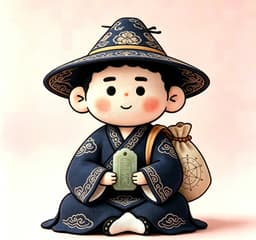
Pianyin
“Your mind never stops turning — it can't.”
Your mind never stops turning — it can't. Even in company, part of you is elsewhere, wandering the inner country where the real questions live.
- Depth of insight that pierces through surface appearance
- Originality — you genuinely see what others cannot
- An inner life so rich you are never truly bored
- Solitude can tip into isolation before you notice
- You overthink — a gift that becomes a cage
- You retreat when you most need to be seen
You love deeply but guard your interior fiercely. You need a partner who respects the silence as much as the words — someone who understands that your distance is not coldness, but the way you recharge to love fully.
You're made for the frontier — research, invention, anything unexplored. You need the freedom to think strange thoughts and follow them. Crowded, conventional rooms will make you wither.
Stories that sound like you.
Even in a room full of people, part of you is somewhere else — wandering the inner country where the real questions live. It's not daydreaming, not exactly. It's a richer, deeper place than the room you're standing in, and you've been visiting it your whole life. In there, things make a kind of sense they don't out here. You think in ways that don't fit the grid. Your mind doesn't run in straight lines — it circles, it dives, it leaps. And you've learned, over the years, to trust those sideways flashes of knowing even when no one else can follow. Because more often than not, the flash turns out to be right. In the Ten Gods, this is Pian Yin (偏印) — the energy of intuition, depth, and the unconventional mind. It is the part of the chart that lives partly in another dimension, perceiving what the ordinary mind misses. Your inner life is not an escape — it's your native country, and it's where your real genius lives. The reframe: the gift comes with a caution. That inner country is beautiful, but you can get lost in it. The world out here needs what you find in there — the ideas, the insights, the different way of seeing. So don't just visit and stay. Go in, bring back the gold, and share it. Come up for air, and bring someone with you. Find one person you can tell about the inner country — not to explain it all, just to show them the door. Your depth was never meant to be lived alone. It was meant to be a gift to the world, and the world is waiting for what only you can bring back.
You need alone time the way other people need air. It's not a preference — it's a requirement, like sleep or water. When you've been around people too long, something in you starts to fray; the noise piles up, the expectations press in, and you can feel yourself becoming a thinner, more brittle version of who you actually are. And then you get your solitude — the quiet room, the empty afternoon, the hour with no one needing anything — and slowly, you come back to yourself. The noise goes quiet. The real you, the one underneath the performance of being social, re-emerges. It's not loneliness. It's home. In the Ten Gods, Pian Yin (偏印) is deeply solitary energy — it needs quiet to recharge, to think, to be. This is not a flaw. It's how you're built, and the people who truly love you understand your silence. But there's a line you have to watch: solitude recharges you; isolation hollows you out. They look the same and feel completely different. The reframe: the question to ask yourself is not "am I alone too much?" but "am I alone to recover, or to hide?" Recovery solitude makes you want to return to people. Hiding solitude makes you afraid to. Know the difference, and honor it. So keep protecting your solitude — it's sacred, and you need it. But before it becomes a wall, let someone in. The right person won't take your quiet away; they'll sit in it with you. You don't have to choose between your inner world and your people. The best ones can hold both.
Your best ideas don't arrive in straight lines. They come in dreams, in sudden flashes in the shower, in the middle of the night when you're half-asleep. You'll be doing something ordinary — walking, washing dishes, staring out a window — and suddenly the answer is just there, whole and complete, like it was waiting for you to be quiet enough to hear it. You've stopped trying to explain this to people. They don't get it — the way your mind works, the leaps, the knowing that arrives without a logical path. So you've learned to just trust it, quietly, and let the results speak. And the results usually do. In the Ten Gods, Pian Yin (偏印) is the energy of intuitive knowing — the mind that works in leaps and flashes rather than steps. It is the source of your creativity, your insight, your ability to see what isn't obvious. It's a genuine gift. But it has a shadow: an overactive mind can become a cage, spinning the same thought forever, mistaking motion for meaning. The reframe: not every thought needs solving. Some thoughts are just weather — they pass through, and they don't require you to do anything about them. The gift of your sideways mind is knowing which flashes to follow and which to let go. That discernment is wisdom. So keep trusting the sideways thoughts — they're your compass. But give yourself permission, on some days, to let the mind be still. Not every question needs an answer tonight. Trust that the important ones will return when they're ready. And they will — they always do, for a mind like yours.
You've been told your whole life that you're too sensitive. That you take things too personally, that you feel too much, that you need to grow a thicker skin. And for a long time, you believed it — tried to harden yourself, to feel less, to be more like the people who seem to move through the world untouched. But here's what they never told you: your sensitivity is not a defect. It's a capacity. You notice the micro-expression, the shift in tone, the thing left unsaid. You feel the mood of a room before anyone speaks. You register pain and beauty at a frequency most people can't even hear. That's not fragility — that's a finely tuned instrument. In the Ten Gods, Pian Yin (偏印) is highly sensitive energy — perceptive, attuned, easily moved. It feels deeply and sees deeply, and that's precisely why it's so often misunderstood by a world that mistakes callousness for strength. But the people who change the world — the artists, the healers, the ones who understand — are almost always the sensitive ones. The reframe: the goal was never to feel less. It was to stop letting your sensitivity be used against you. A thick skin and an open heart are not opposites — you can protect yourself and still feel everything. The trick is boundaries, not numbness. So stop apologizing for feeling. Your sensitivity is your superpower, not your flaw. Just learn to close the door when you need to, to step out of rooms that drain you, to save your depth for the people and work that deserve it. You weren't built to be unfeeling. You were built to feel the world deeply — and that's a rare and precious thing.
You've felt it your whole life: you're a little off the grid. Your interests don't match the crowd's, your jokes land differently, the things that fascinate you — the weird, the deep, the unexplained — make other people's eyes glaze over. In school, in work, in family gatherings, you've spent years being the one who doesn't quite fit. And you've probably spent a lot of that time trying to. Shrinking the strange parts, hiding the odd fascinations, pretending to be more normal than you are. Because being the strange one is lonely, and there were days you'd have traded your difference for belonging in a heartbeat. In the Ten Gods, Pian Yin (偏印) is the energy of the unconventional and the singular — the part of you that thinks differently, sees differently, and simply cannot be flattened into the ordinary. It's the reason you don't fit. It's also the reason you see what the crowd can't, and the reason you'll do what the crowd never would. The reframe: you were never supposed to fit in. The grid wasn't built for people like you — it was built to sort the ordinary, and you were always meant to exceed it. The strange parts you've been hiding are the exact parts the world is starving for. Originality always looks strange before it looks like genius. So stop sanding yourself down. Find your people — the ones whose eyes light up at the weird, the deep, the unexplained. They're rarer, but they exist, and they've been looking for someone like you. You don't need to become normal. You need to become fully, unapologetically yourself. That's the only version of you that was ever going to matter.
You get a feeling about people, situations, decisions — a quiet knowing that arrives before any logic catches up. And here's the thing: it's usually right. You've looked back at the times things went wrong and realized, with a jolt, that you knew. Some part of you knew from the start, and you talked yourself out of it. Because intuition doesn't come with receipts. It can't explain itself in the boardroom, can't justify itself to the skeptic, can't produce the five-step argument everyone wants before they'll take you seriously. So you learned to distrust it — to wait for the data, the proof, the permission — even when your gut was already screaming the answer. In the Ten Gods, Pian Yin (偏印) carries powerful intuitive intelligence — the ability to know without knowing how you know. It is the most reliable compass in your chart, and it speaks in feelings, images, and hunches rather than facts and figures. The problem isn't that your intuition is wrong. It's that you keep overriding it. The reframe: your intuition doesn't need permission. It has earned your trust a hundred times over, and the only mistake you keep making is ignoring it. You don't have to explain the knowing to anyone else — you just have to start acting on it. So next time the quiet voice speaks, listen the first time. Not recklessly — your intuition is wise, but you can still check it against the facts. Just stop treating the facts as the boss and the intuition as the intern. They're partners. And when they disagree, at least hear the intuition out. It's been right more often than you've been willing to admit.
It starts the moment you try to rest. The replaying of the conversation, the endless what-ifs, the problem your mind keeps turning over like a stone, searching for an answer that never quite resolves. You lie awake at 2 a.m., exhausted and wide-awake, your thoughts running in circles that go nowhere and everywhere at once. People tell you to just stop thinking, as if it were that easy. They don't understand that your mind is not a switch you can flip — it's an engine that runs on its own, and it's been running your whole life. It's the same engine that gives you your best ideas and your worst nights. In the Ten Gods, Pian Yin (偏印) is the energy of a deep, active, unquiet mind — it thinks, it analyzes, it seeks, it never fully powers down. This is the source of your insight and your creativity. But left without a brake, it becomes rumination: thinking as a way of avoiding feeling, spinning as a substitute for resolving. The reframe: the goal isn't to stop thinking — it's to think on purpose, and then give your mind somewhere to land. Rumination is not problem-solving; it's the mind pacing because it doesn't know what else to do. The way out is to externalize it: write it down, say it out loud, name the fear you're circling. So try this tonight: before bed, empty your head onto a page. Every circling thought, every what-if, dumped out where you can see them. Then close the notebook, and let the mind rest. It will fight you at first. But a mind that knows its thoughts are caught on paper can finally let go. You don't need to stop thinking. You need to teach your mind how to land.
While everyone else is content with the surface of things, you've always been pulled toward what's underneath — the mysteries, the patterns, the questions that don't have clean answers. The meaning of dreams, the way intuition works, the strange coincidences that feel like anything but. You read the books no one else reads, ask the questions no one else asks, feel drawn to the spiritual, the symbolic, the unseen. And you've learned to be careful about who you share this with. Because the moment you mention it, you watch their face change — the polite smile, the subtle retreat, the unspoken judgment that you're a little odd, a little woo-woo, a little too much. In the Ten Gods, Pian Yin (偏印) is the energy of the mystic and the seeker — it is drawn to the hidden, the symbolic, the unexplained. It perceives dimensions of reality that the purely rational mind dismisses. This is not naivety; it's a different kind of intelligence, one that knows the world is bigger and stranger than the surface suggests. The reframe: your fascination with the unseen is not a flaw — it's a calling. The people who dismiss it are not more rational than you; they're just less curious. Every field that has ever advanced began with someone asking the question everyone else thought was strange. So stop hiding the seeker in you. Follow the questions that pull at you — the dreams, the symbols, the mysteries — and trust that they're leading somewhere real. Find the others who share your hunger; they exist, and they've been looking for you too. You're not strange. You're awake to a bigger world, and that's a gift, not a defect.
Sometimes you feel less like a participant in your own life and more like an observer — watching yourself go through the motions, the conversations, the routines, as if from a few feet away. You can be standing in the middle of your own birthday party and still feel like you're watching a scene in someone else's movie. It's not depression, exactly. It's a kind of detachment you've never had a name for. It can feel like a curse — this sense of being slightly outside everything, never quite fully in the moment, never quite fully connected. But it also gives you something rare: a clarity most people never have. You see your life, and yourself, with an objectivity that lets you notice patterns, understand motives, make changes others can't. In the Ten Gods, Pian Yin (偏印) carries a natural detachment — it steps back, observes, reflects. This is the source of your insight. But detachment and disconnection are two different things, and you've crossed into the second one more often than you'd like to admit. The reframe: your ability to step back is a gift — use it to see, then step back in. The point of the distance isn't to live there. It's to look clearly, understand what you're seeing, and then choose to re-engage with your whole self. Observation is for a moment; participation is for a life. So the next time you catch yourself watching from outside, ask: what am I avoiding by staying up here? Then take one step back in — say the thing, feel the feeling, be in the moment even if it's clumsy. You were never meant to be a spectator in your own life. The distance is a tool, not a home.
You've always had a strange gift for seeing into people. You notice the thing they're hiding behind the smile, the real reason behind the excuse, the wound underneath the bravado. You'll meet someone once and understand them more deeply than people who've known them for years. It's not judgment — it's just clear sight, and it's always been there. But here's the lonely part of it: the seeing doesn't go both ways. You understand everyone, and almost no one understands you. They see the surface — the quiet one, the strange one, the hard-to-read one — and they never get past it. So you carry this one-way clarity, seeing everything and being seen by no one. In the Ten Gods, Pian Yin (偏印) has penetrating insight into others — it reads beneath surfaces, perceives motives, understands what drives people. This is a rare and valuable gift, the mind of a natural psychologist. But its shadow is the isolation that comes from being the one who always sees and is rarely seen. The reframe: you don't have to stop seeing deeply. But you have to stop treating your depth as a one-way street. The right people will see you, too — if you let them. Not because they have your gift, but because you finally show them enough of yourself to be seen. So risk being understood. Tell someone what's actually going on under your quiet surface. Let them see the strange, deep, complicated person you really are. It's terrifying, and it's the only way out of the loneliness. You've spent a lifetime seeing everyone. You deserve, at least once, to be seen back.
“You are not strange — you are a genius not yet understood.”
Pianyin is the part of you that thinks differently. Not differently to be difficult — differently because your mind simply refuses to accept a ready-made answer. You take in what everyone else takes in, and what comes out is something no one has ever seen before.
The Cognitive Awakening Course
“Know your energy. Awaken your life.”
You’ve met your archetype. Now learn to work with it — turn self-knowledge into a life you actually live.