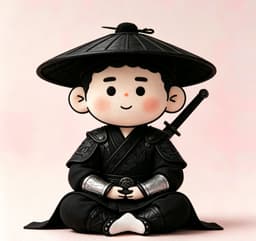
Qisha
“You were never meant to guard the fort — you were meant to build one.”
You were never meant to guard the fort — you were meant to build one. There is a force in you that rises precisely when the pressure is highest, when others freeze or flee.
- Courage that activates under pressure, not in spite of it
- Decisiveness that turns chaos into direction
- A protective strength that makes others feel safe
- You bulldoze through what a gentler touch would have healed
- You read softness as weakness, including your own
- Rest feels like failure to you — until it breaks you
You love fiercely, loyally, and often silently — you show it in protection, not poetry. Your lesson is to let yourself be soft with the one person who's earned it, because strength without tenderness becomes a wall.
You are built for the hard things — turnarounds, crises, ventures that others call impossible. Calm will feel like stagnation; give yourself a worthy battlefield, and you'll astonish everyone, including yourself.
Stories that sound like you.
You can't stand still — not because you're restless, but because you can feel what's possible, humming just out of reach. While others are still deciding, you've already started. While they're debating the risks, you've taken three steps and learned more than their whole meeting will. People call it bold. You call it obvious — the move was right there, and somebody had to take it. Your gift is seeing the move before anyone else does. Your shadow is that the people around you can't always keep up — and your impatience, when it leaks out, sounds like judgment. It's not; it's just how fast your mind runs, and how lonely it can be to run alone. In the Ten Gods, this is Qi Sha (七杀) — the purest action energy in the chart. It is the part of you that moves first, decides fast, and refuses to be paralyzed by fear. It is why you win in situations that freeze everyone else. It is also why stillness feels like dying to you. The reframe: you don't have to slow down to make room for others — you have to communicate. The people who love you don't need you to wait; they need you to glance back and say, "here's where I'm going, come with me." That single sentence turns your speed from something that leaves people behind into something that pulls them forward. Keep moving. It's who you are. Just remember that a leader isn't the fastest person in the room — it's the one who runs fast enough to open the path, and cares enough to bring people through it.
You're at your best when the stakes are highest. Calm waters make you nervous; storms make you sharp. While everyone else is panicking, something in you clicks into place — the fog clears, the hands steady, the decision arrives whole and clean. It's not that you enjoy the crisis; it's that the crisis is the only place you're fully alive. Most people run from pressure. You run toward it, and you've built a life around it — the high-stakes job, the impossible deadline, the thing no one else would touch. It works, until it doesn't, because a person who only feels alive under fire eventually forgets how to exist in the quiet. In the Ten Gods, Qi Sha (七杀) is the energy of pressure and intensity. It is forged in challenge, and it genuinely performs better under load. This is rare and powerful. But the same fire that forges steel will eventually consume a body that never leaves the furnace. The reframe: you don't have to choose between the storm and the soft. The bravest thing you'll ever do is not win another fight — it's to let yourself want something gentle, and to stay in it long enough to learn its language. Rest is not the enemy of strength. It's the thing that lets strength last. Keep running toward the fire when it calls. But build a home you actually want to come back to. The sharpest blade is the one that gets sheathed sometimes. You were never meant to live your whole life in the fight.
In a crisis, people look at you. It happens without anyone deciding it — the room goes quiet and the eyes turn, and suddenly you're the one speaking, deciding, pointing the way. You don't panic. You don't wait for permission. You just act, because someone has to, and you've known since you were young that "someone" is usually you. It's a gift people don't appreciate until they need it. And here's the part no one talks about: leading is lonely. The person who decides is the person who gets blamed when it fails. You've carried that alone more times than you can count, because showing the weight would feel like admitting you're not strong enough to hold it. In the Ten Gods, Qi Sha (七杀) is the commander energy — decisive, fearless, built to take charge when everything is falling apart. The chart gives you this for a reason. But command is not the same as carrying everything yourself. A general who never trusts their lieutenants wins battles and loses the war. The reframe: the ones who follow you aren't tools — they chose you. And they're not following because you're invincible; they're following because they trust your judgment. Trust them back. Delegate the load, share the fear, let someone else hold a corner. Leading means carrying people, not just outcomes. Let them in. The strongest leader isn't the one who never needs help — it's the one brave enough to ask for it, and show the people behind them that asking isn't weakness. It's how a group becomes a team.
You treat everything as a competition, even the things that aren't. The promotion, the argument, the game night, the conversation where someone casually mentions their weekend and you feel a flicker of comparison. You don't even notice it most of the time — it's just how you're wired, a low hum of "win" running under everything you do. Winning feels like relief. Losing feels like a verdict. So you push, and you grind, and you come out on top more than most people ever will — and yet the wins never quite satisfy, because there's always the next one, and the thought of losing it is already gnawing at you. In the Ten Gods, Qi Sha (七杀) is deeply competitive energy — it wants to conquer, to prevail, to prove itself against the world. This drive built your life. But left unchecked, it turns every day into a battlefield with no truce, and a person can't live their whole life at war. The reframe: not everything is a contest, and the people who love you are not your rivals. Some things — a friendship, a partnership, a quiet Sunday — only work if you stop keeping score. The question isn't whether you can win; it's what you're actually winning for, and who you're leaving exhausted in the process. You are more than your last result. Try, this week, to do one thing with no winner and no loser — something you're not good at, something no one's judging. Let yourself be mediocre at it, on purpose. The relief you feel will tell you something your ambition never could: you were never just a scoreboard. You're a person, and people get to rest.
You climbed. You fought, you outworked, you outlasted, and now you're standing somewhere you spent years trying to reach — the title, the seat, the authority you always wanted. And you looked around and realized something you didn't expect: it's quiet up here. The people who used to joke with you now nod politely. The ones you passed on the way up stopped calling. You told yourself this was the price. And it is, partly. Power has always had a tax. But somewhere between the ambition and the achievement, you started to wonder whether what you won was worth what it cost to be this alone. In the Ten Gods, Qi Sha (七杀) is the energy of power and command. It climbs, it conquers, it takes the throne. But power that's held at arm's length — always managing, always guarding, never admitting weakness — becomes a very expensive kind of isolation. You can run a room and still be starving in it. The reframe: you don't have to choose between being respected and being real. The leaders people actually trust are the ones who let the mask slip now and then — who admit they're tired, who ask for help, who let a few people past the armor. Authority doesn't require distance. It requires honesty. Let one person in. One person who knew you before the title, or one who's proven they see you, not the position. Tell them the truth about the loneliness. You'll find the seat gets a little less cold. The view was never the point — the people you get to share it with were.
There's a part of you that runs hot. When something crosses the line — an injustice, a betrayal, someone hurting someone you love — the anger doesn't build, it detonates. And in that flash, you've said things you can't take back, burned bridges you'd rather have kept, and left people a little afraid of you, which was never what you wanted. Then the fire passes, and you're left with the wreckage and the shame — apologizing for the heat, promising it won't happen again, and quietly wondering why you can't control the thing that feels, in the moment, so completely justified. In the Ten Gods, Qi Sha (七杀) carries enormous intensity, and intensity includes anger. It is the energy of the warrior — it protects, it fights, it refuses to tolerate what's wrong. That's a strength. But a warrior without a sword-handle is just a wildfire, and wildfires burn the people who matter most. The reframe: your anger isn't the enemy. It's a signal — and it's usually right about what it's pointing at. The problem is never that you feel it; it's that you act while it's still white-hot. The single skill that changes everything is the pause — one breath, one step back, one beat between the spark and the words. In that pause, ask: what am I actually protecting right now? Aim the fire at the problem, not the person. You don't have to become soft. You have to become precise. A blade is only dangerous when it's swung blind; held steady, it's the thing that keeps everyone you love safe.
When you want someone, you want them completely. You pursue with everything you have — the focus, the intensity, the absolute refusal to give up. And at first, that fire is intoxicating; people are drawn to being wanted that completely. You make them feel chosen in a way no one else ever has. But then the wanting tips over into something harder. The need to control, to know where they are, to win every argument, to have the upper hand. You don't mean it to feel like a battlefield — it's just how you love, with your whole self and no brakes. But the person on the other side of it starts to feel conquered instead of cherished. In the Ten Gods, Qi Sha (七杀) loves with the energy of pursuit and power. It wants to possess, to protect, to be the strongest thing in the room. That protectiveness is real. But love that needs to win turns a partnership into a power struggle, and no one gets to feel safe in a fight they can never stop having. The reframe: the opposite of control isn't weakness — it's trust. The strongest love you'll ever offer isn't the one that holds on tighter; it's the one that opens its hand and lets the other person choose to stay. That takes more courage than any conquest ever did. So loosen your grip. Let them have their own life, their own friends, their own answers. Stop needing to win the argument and start needing to understand it. You'll find that the person you were so afraid of losing was never leaving — they were just waiting for you to stop fighting long enough to hold them.
You've been running for so long that stopping feels wrong in your body. A day off makes you anxious; a quiet moment makes you reach for your phone, your list, the next thing. Even when you're exhausted, you can't seem to put the sword down, because some part of you believes that if you stop moving, everything you've built will collapse — or worse, that you'll have to feel whatever you've been outrunning. The people around you tell you to relax, and you nod, but they don't understand: this isn't a choice. It's a survival pattern worn so deep it's become your default. You don't know who you'd be without the fight. In the Ten Gods, Qi Sha (七杀) is the energy of constant forward motion — always vigilant, always ready, always engaged. It kept you alive through hard seasons. But a body and mind held in permanent alert eventually break, and the collapse, when it comes, is not a failure of strength — it's the overdue bill for never resting. The reframe: rest is not giving up. It's the deliberate act of a warrior who intends to fight for many years, not just the next one. The sharpest people you admire all have one thing in common — they learned to recover as hard as they attack. Recovery is not the opposite of your ambition; it's the engine of it. Start tiny. Ten minutes, fully yours, with no goal and no phone. Sit with the discomfort of doing nothing. It will feel unbearable at first — that's the point. Stay. You're not losing your edge by resting. You're sharpening it, for the fight that actually matters: the long one.
You've always known you're willing to go further than other people. Where they hedge, you commit. Where they save, you stake. Where they wait for a guarantee, you act on a conviction and let the chips fall. It's not recklessness — most of the time, it's courage, and it's the reason you've built and won things that more careful people only dream about. But the same instinct that makes you bold can also make you blind. There have been times you gambled more than you could afford to lose — not money, but trust, time, relationships — and told yourself it would work out, because it usually does, until the day it doesn't. In the Ten Gods, Qi Sha (七杀) carries the gambler's nerve — the willingness to bet on yourself when the odds are unclear. It is a rare and valuable trait; every great leap was taken by someone who refused to play small. But nerve without judgment is just a coin flip, and you've felt the cost of landing on the wrong side. The reframe: courage and recklessness are separated by one question — can I survive losing this? The boldest people aren't the ones who never calculate the risk. They're the ones who calculate it, accept it, and then act anyway, with a floor they've built beneath them. Keep your nerve. It's your edge. Just pair it with a limit — a line you won't cross, a fallback you've secured, a person you check with before the big leap. You don't have to stop betting on yourself. You just have to make sure the bet can't take out the whole table. That's not playing small. That's playing smart enough to keep playing.
You've built your identity on being the strong one — the one who doesn't crack, who handles it, who never lets them see you sweat. Showing weakness, even to the people closest to you, feels like handing over a weapon. So you soldier through everything alone: the fear, the doubt, the nights you lie awake wondering if you can actually pull this off. But there's a cost to that armor, and it's this: you've made yourself unreachable. The people who love you can't help you because they can't see you. They get the version of you that's already handled it, never the version that's still scared and could have used a hand. In the Ten Gods, Qi Sha (七杀) projects strength and fears vulnerability. It has been taught — or has taught itself — that needing help is the one thing that must never show. That belief probably kept you alive once. But it's now the wall between you and the very connection you're starving for. The reframe: vulnerability is not weakness — it's the bridge other people need to reach you. The strongest person in the room isn't the one who never falls; it's the one who falls and lets someone help them up. That takes a kind of courage no battle ever demanded. So let one person see the real thing. Start small — "I'm not okay today" is enough. Watch what happens: the people who love you won't use it against you. They'll be relieved, because they've been waiting for a door in that armor for years. You were never meant to carry all of it alone. That's not failure. That's what the people who love you are for.
“Your sharpness is not aggression — it is the blade that opens a path.”
Qisha is the part of you that fights. Not for sport, not out of anger — but because challenge is the air you breathe. It is your built-in competitive engine: the boldness, the execution power, the will to win that most people have to work hard to summon, but that in you is simply always on.
The Cognitive Awakening Course
“Know your energy. Awaken your life.”
You’ve met your archetype. Now learn to work with it — turn self-knowledge into a life you actually live.