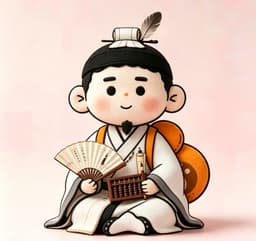
Shangguan
“You either don't speak, or you speak the truth.”
You were born seeing the cracks in things — the rules that don't make sense, the emperor who has no clothes. And you've never been able to look away, even when it cost you.
- Original thinking that refuses the beaten path
- The courage to say what everyone else is thinking
- A talent that doesn't imitate — it invents
- Honesty without tact reads as cruelty to softer souls
- You rebel against authority, sometimes to your own cost
- Your brilliance can intimidate the very people who'd champion you
You love with fire and words — you need a partner who can take your truth and not flinch. Someone who sees that behind the sharp tongue is someone desperate to be understood, not just admired.
You are made to create the new — art, ideas, systems no one else has built. Structure will feel like a cage unless it's your own. Give yourself a canvas, not a cubicle.
Stories that sound like you.
You were born seeing what's wrong with the picture — the rule that doesn't make sense, the emperor with no clothes, the lie everyone politely ignores. In meetings you're the one who asks the question no one wants asked; at family dinners, the one who says what everyone is thinking but won't touch. You can't unsee it, and you can't keep quiet about it. It isn't a choice — it's a reflex, like blinking. Some call you difficult. Argumentative. Negative. They say you ruin the mood. But here's what they miss: you don't point at cracks because you enjoy them. You point because a crack, left alone, becomes the wall falling down. You are the one who cares enough about the thing to tell the truth about it. In the Ten Gods, this is Shangguan (伤官) — the energy of piercing intelligence and fearless expression. It is the part of the chart that cannot pretend, that would rather be honest than liked. And that is exactly why it makes people uncomfortable: truth, spoken plainly, is a kind of power, and most people have never learned to hold it without flinching. The reframe: you are not the problem in the room. You are the one who can save the room — if you learn the difference between cutting and clearing. Cutting aims at people; clearing aims at the thing that's broken. Both tell the truth. Only one leaves a person standing who can actually fix it. So keep seeing the cracks. That's a gift almost no one has. Just remember the goal was never to be right — it was to be useful. Say the hard thing, and say it in a way the other person can walk away and act on. That's how a difficult person becomes an indispensable one.
There's no middle setting in you. You either don't speak at all, or you speak exactly what you mean. Softening it feels like lying; wrapping it in cushions feels like cowardice. So you've spent years watching people wince at your honesty, and then you've spent years after that learning to just... stay quiet. Not because you stopped seeing — because you got tired of the flinching. But silence costs you more than you admit. When you swallow the truth, it doesn't dissolve. It sits in your chest and turns sour — into resentment, into that bitter sense that you're surrounded by people who can't handle you and a world that won't hear you. In the Ten Gods, Shangguan (伤官) is the voice of the chart — the raw, unstoppable impulse to say what is real. It is not a flaw to be trained out of you. It is the very instrument of your power. The question has never been whether to speak; it's how to aim. Here is the reframe. Honesty is not cruelty, and timing is not weakness — but neither is honesty a license to wound. The people worth keeping can take your truth; what they deserve is the true version, not the sharpened version. Truth and kindness are not opposites. They are two edges of the same blade, and you get to choose which one leads. So don't retreat into silence, and don't swing the blade raw. Say the real thing, straight, and stay long enough to hold the reaction you caused. The people who matter will not just survive your honesty — they'll come to rely on it, because you're the only one who tells them what everyone else is too scared to say.
Your mind moves too fast for most rooms. You see the shape of an idea before others even see the idea; you finish the sentence before they start it; you spot the flaw in the plan while everyone else is still admiring the plan. It makes you feel like you're speaking a language no one else learned, and the loneliness of that is real and specific. You've probably been told to slow down, to explain more simply, to meet people where they are. And you've tried. But it feels like dimming your own light to make the room comfortable, and it never quite works anyway — because the gap isn't speed, it's that you're simply early. In the Ten Gods, Shangguan (伤官) carries the highest-frequency intelligence in the chart — the part that innovates, disrupts, sees around corners. Early is your natural position. Being early means being misunderstood; it is the price of the gift, not proof that the gift is wrong. So stop slowing down to make them comfortable. That's not kindness, it's self-abandonment — and it doesn't serve anyone. The right move is not to wait for the room to catch up. It's to find the few who already speak your speed, and build there. Look for your people. They're rarer, but they exist — the ones whose eyes light up when you finish the thought they were half-having. With them, you won't feel early; you'll feel finally on time. Protect those people. Water that ground. Your best work was never meant to be understood by everyone — only by the ones ready to run with you.
You've heard it your whole life, in one form or another: too much, too intense, too sharp, too much work to be around. It stings more than you let on, because the thing they're rejecting isn't a bad habit — it's the very thing that makes you good at what you do. Your fast mind, your refusal to fake it, your allergic reaction to mediocrity. Those are the qualities they punish and then quietly depend on. So you've tried to shrink. To soften, to sand yourself down, to be more agreeable. And every time you do, a little of your fire goes out, and the work gets worse, and you resent the person you're pretending to be. In the Ten Gods, Shangguan (伤官) is the talent star — the raw brilliance that cannot be contained by ordinary structures. It produces, it critiques, it reinvents. It is also, by nature, disruptive to authority, because it will not bow to rules that don't earn their keep. That is not a character defect. That is a function. The reframe: "difficult" is usually what comfortable people call the one who refuses to be managed. You are not too much. You are in the wrong room. There is a difference between being tolerated for your output and being wanted for your mind — and you can feel the difference in your body the moment you walk in. Stop negotiating yourself down. Find the people and the work that want the full voltage, not the dimmed version. The world is full of rooms that will call you difficult. There are a few that will call you necessary. Aim your whole life at the second kind.
Your emotions don't rise, they arrive. One moment you're fine; the next, a wave of anger or hurt or elation has swept over you and everyone in the room is looking at you like you've done something wrong just by feeling it. You've been told to calm down, to not take things so personally, to be more rational — as if the speed and size of your feelings were a choice you keep making badly. But you don't feel too much. You feel exactly, and instantly, and all the way — and the people around you, most of whom feel slowly and small, mistake your intensity for instability. In the Ten Gods, Shangguan (伤官) is deeply emotional energy — brilliant and expressive, but governed by the heart, not the head. It feels things at full volume, and it cannot pretend otherwise. That is not a weakness to fix. It is a signal you're built to experience the world in high definition, and the wave is just the price of that. The reframe: the problem isn't the wave. It's that you react to the wave while it's still crashing. There is a single, learnable skill that changes everything — the pause. Not suppressing the feeling, not delaying it forever. Just the three-second gap between the wave hitting and the words leaving your mouth. In that gap, you get to choose. The feeling stays — it's yours, and it's real. But the response becomes yours too. You don't have to become calm. You just have to stop letting the first wave write the story. Master the pause, and your intensity stops being a liability and becomes exactly the force that moves people.
Some people accept authority because they've never thought to doubt it. You're the opposite — you can't swallow a rule until you've turned it over, poked at its edges, and found out whether it actually holds up. So in every job, every classroom, every family system, you've been the one asking "why?" — and too often, the one being punished for it. People read your questions as defiance, as disrespect, as an inability to be a team player. But that's not what's happening. You're not trying to break the rules. You're trying to find out which ones deserve to stand. In the Ten Gods, Shangguan (伤官) naturally opposes Zheng Guan (正官), the energy of authority and structure. That tension is built into your chart — a mind that cannot obey blindly, that must understand before it can commit. It is why you're so often at odds with bosses and systems. It is also why you're the one who spots the broken rule before it costs everyone. The reframe: your refusal to obey without understanding is not disloyalty — it's integrity with a question mark. The world needs both the people who build systems and the people who test them. You're a tester. But testers who only ever poke holes get benched; testers who build the better version get promoted. So when you question, bring the replacement. Not just "this is wrong" but "here's what would work better." That one shift turns you from a threat to a resource. Keep the question — it's your power. Just pair it with the answer, and watch how differently the room hears you.
When you love, you love out loud. You say the thing, you show up, you pour yourself in without a metering valve. You don't do lukewarm — you can't. And in the beginning, that intensity is magnetic; people are drawn to your fire, your honesty, the way you make them feel alive. Then, somewhere along the way, it becomes too much for them. They need space, they need slow, they need the volume turned down. And you're left holding all this love with nowhere to put it, feeling like your very nature is the thing that drove them away. In the Ten Gods, Shangguan (伤官) loves the way it does everything else — completely, expressively, with the whole self. It has no dimmer switch. And that fullness, which is your greatest gift, can feel like a flood to someone built for a slow river. The reframe: it's not that you love too much. It's that you've been loving people who can't hold your much. There's a difference, and the difference is everything. The right person doesn't just tolerate your intensity — they're built to meet it, and your fullness stops feeling like a burden and starts feeling like home. Don't shrink your love to keep the wrong person comfortable. That's the one betrayal you must never commit. Instead, learn to read the person in front of you — do they lean in when you're loud, or step back? The ones who step back aren't bad; they're just not your match. Save the full voltage for someone who leans in. They're out there, and they're waiting for exactly what you have.
The people you love most are the ones you hold to the highest standard. You notice when they're selling themselves short, when they're settling, when they're about to make a mistake — and because you care, you say something. Not to hurt them. To protect them, to push them, to save them from the thing you can already see coming. But here's what happens: they hear the criticism, not the love behind it. They feel judged, attacked, picked apart. And you're left confused and hurt, because in your head you were being the most loyal person in the room. In the Ten Gods, Shangguan (伤官) expresses care through honesty — it sharpens the people it loves, because it believes softness lets them down. This is a real form of love. But it is a form of love that most people never learned to recognize, because it arrives wrapped in a critique. The reframe: your instinct is right, but the delivery is costing you everything. The people who love you need to hear the love first, explicitly, before they can receive the push. "I'm telling you this because I believe in you" — that sentence, said out loud, is the difference between being heard and being resented. So lead with the belief, then deliver the truth. You don't have to soften the message — you have to make the motive visible. The people who know you're on their side will take a hard truth from you that they'd never take from anyone else. That's the whole trick: you already have the loyalty. You just need them to see it.
Your head is full of ideas — genuinely good ones. New projects, new angles, new ways to do old things better. You start with a burst of energy that feels like flying, and for a while you're unstoppable. But then the hard, repetitive middle arrives — the part that isn't exciting, the part that's just work — and the next shiny idea is already tapping you on the shoulder. So you've got a trail of half-finished things behind you: the novel in chapter three, the business plan in a drawer, the skill you almost mastered. And a growing, quiet fear that you're all spark and no fire. In the Ten Gods, Shangguan (伤官) is pure generation — it creates endlessly, but it does not, on its own, complete. Completion belongs to discipline, and discipline has never been the fun part. This is the exact point where most brilliant people stall: they confuse the high of starting with the work of finishing. The reframe: you don't need more ideas. You need fewer, finished. One idea carried all the way through is worth a thousand brilliant starts — because the world pays for finished things, and finished things are what build the confidence that carries the next one. Pick one. Just one — the one that won't leave you alone. Put a wall around it, and tell every new idea to wait in line. The grind of the middle is not the enemy; it's the price of getting to the part where your talent actually matters. You were born to make things. Finishing is how the world finally gets to see them.
People have told you, in words or in looks, that you're a lot. That loving you takes work, that you don't make it easy, that you could be wonderful if only you'd soften a little. And there are nights you lie awake believing it — wondering why you can't just be easy, why you have to feel everything and say everything and need everything at full volume. But look closely at what they're actually asking. They're not asking for you. They're asking for a quieter version of you — a version that doesn't challenge, doesn't speak up, doesn't feel so much. They're asking you to shrink so they can be comfortable. And that is not love. That is a transaction. In the Ten Gods, Shangguan (伤官) is fundamentally unable to fake it. It is the most authentic energy in the chart — it cannot smile when it's angry, cannot nod when it disagrees, cannot perform a softness it doesn't feel. This is not a flaw. It is the absence of a flaw: the thing people call "difficult" is really just you refusing to lie. The reframe: you are not hard to love. You are hard to lie to, hard to control, hard to keep small. The people who found you difficult were people who wanted an easier version of the world. The right people won't want you softer — they'll want you real. Stop auditioning for people who want you muted. The ones who are meant for you will not just tolerate your authenticity — they'll be relieved by it, because they've spent their whole lives surrounded by performances. You are the real thing. Hold out for someone who's been waiting for exactly that.
“Burn your inner fire into visible light.”
Shangguan is the part of you that creates and speaks — with fire. It is your talent, your expression, your refusal to stay silent. It is the inner force that turns what you feel and think into something the world can see, hear, and be changed by.
The Cognitive Awakening Course
“Know your energy. Awaken your life.”
You’ve met your archetype. Now learn to work with it — turn self-knowledge into a life you actually live.