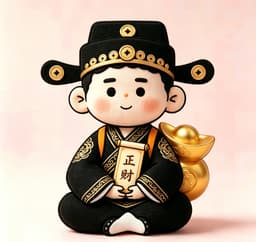
Zhengcai
“One step at a time — wherever you stand, it's solid ground.”
You build the way stone is laid — one careful piece at a time, each one tested before the next. Where others chase, you accumulate. Where others gamble, you calculate.
- Patience that turns small deposits into lasting wealth
- Dependability that makes you the bedrock of any team
- A respect for craft that produces real, lasting quality
- Caution can harden into a refusal to ever change
- You save for a future you keep postponing
- You mistake 'safe' for 'right' more often than you'd like
Your love is quiet, steady, and built to last — but it can be mistaken for lacking passion. Your lesson is to spend as deliberately on the present as you save for the future; love, too, is a kind of investment.
You flourish in work where consistency compounds — finance, engineering, craft, any field where doing it right ten thousand times matters more than doing it brilliantly once.
Stories that sound like you.
While everyone else chases the shiny thing, you're laying stone — one careful piece at a time, each one tested before you set the next. You don't get excited fast, and that used to feel like a disadvantage, watching other people catch fire over ideas you could already see the flaws in. But here's what the years have proven: you last. People call you boring. You call it solid. And solid is what's still standing when the sprinters have burned out and moved on to the next flashy thing they'll abandon in six months. The world is full of fast starters and very few finishers — and you, quietly, are a finisher. In the Ten Gods, this is Zheng Cai (正财) — the energy of steady, patient accumulation. It builds wealth and relationships the way a stone wall is built: slowly, deliberately, in a way that's meant to stand for decades. It doesn't sparkle. It endures. The reframe: your slowness is not a lack of ambition — it's a different kind of ambition, the kind that measures success in years instead of weeks. While others are chasing, you are compounding. And compounding, quietly and boringly, is how real fortunes — of money, of skill, of love — actually get built. So stop apologizing for not catching fire. Your steadiness is the point. Keep laying the stone. One day you'll look up and realize the wall you built is the thing everyone else is leaning on, and they'll wonder how you did it. You did it the only way anything real gets done: one stone at a time, for a long time.
People know that if it's in your hands, it's done. Not because you're fast — you're not, and you've never pretended to be. But because you never drop what you commit to. The project, the promise, the person counting on you: once you've said yes, it's as good as finished. That reliability is worth more than talent in most rooms, though most rooms never say so out loud. But there's a shadow side to being the dependable one, and you've felt it: the steady person becomes the default person. The one everyone hands their problems to, the one who never gets to be the one falling apart, the one whose "yes" is so automatic that people stopped treating it as a gift. In the Ten Gods, Zheng Cai (正财) is the energy of commitment and diligence — it keeps its word, finishes the work, honors the obligation. It is the backbone people build on. But a backbone that's never allowed to rest eventually gives out under everyone it's holding up. The reframe: "dependable" must never become "doormat." Being solid doesn't mean you always have to be the one holding everyone else up. You get to have limits, to say no, to be the one who needs carrying sometimes. The people who truly value you won't love you less for having a boundary — they'll respect you more. Keep being the person things don't fall apart around. Just remember you're allowed to set the load down now and then. You were never meant to be everyone's foundation. You were meant to be someone's equal, and your own person first.
You save. You plan. You wait for the right moment instead of seizing the first one. People mistake that for fear — they see your caution and read it as timidity, as a life lived in retreat. But they're wrong about what they're seeing. What they call fear is actually discipline: the patience to build something that lasts instead of something that flashes and fades. Except there's a question you've been avoiding, and it deserves an honest answer: am I saving for a future, or am I postponing a life? Because there's a difference between being prudent and being a miser with your own happiness — between building security and hoarding it so tightly that you never actually spend it on being alive. In the Ten Gods, Zheng Cai (正财) is the energy of resource and provision — it gathers, protects, and ensures there will be enough. This is wisdom. But wisdom without generosity toward yourself becomes a slow kind of withholding, and you've felt the cost: the trip not taken, the dinner skipped, the joy deferred "for later" until later stopped coming. The reframe: security is meant to be the floor you stand on, not the ceiling you live under. You've built the floor — now it's time to let yourself use it. A life that's only ever saved and never spent is not a life; it's a warehouse. So spend a little on the present. Not recklessly — you'd never do that, and you don't need to. But deliberately, joyfully, on the thing that makes you feel alive. It's not a break from your discipline. It's the point of it. You saved so you could live. Now let yourself live a little, so the saving means something.
You're the one who stays late when everyone's gone, who takes on the extra task without being asked, who never calls in sick even when you probably should. You believe — deeply, in your bones — that if you just work hard enough, do enough, earn enough, eventually the feeling of scarcity will lift and you'll finally be safe. But it never quite lifts. The harder you work, the more the goalpost moves. Every raise feels like it should be enough, and then it isn't. And underneath the exhaustion is a quieter, crueler thought: maybe I'm just not working hard enough. In the Ten Gods, Zheng Cai (正财) is the energy of steady labor and earned reward — it believes, correctly, that value comes from effort. But it can also fall into the trap of equating your worth with your output, and once that equation is set, no amount of work ever satisfies it. The treadmill never ends, because the finish line was never real. The reframe: your worth was never measured in your productivity. You were enough before you worked a single hour, and you'll still be enough if you take a day off. The feeling of "not enough" isn't a signal to work harder — it's an old belief, worn like a groove, and you can stop walking it. Try this: one evening, stop early. Deliberately, at a reasonable hour, walk away from the work and do not come back to it. Feel the guilt rise, and don't feed it. It will pass — and you'll discover that the world held together fine without your extra hours. You're not behind. You're just measuring with a ruler that was never yours.
You're careful with money. You track it, you budget it, you think twice before spending it. People sometimes read that as stinginess, but it isn't that at all. Money, to you, isn't about buying things — it's about what it represents: safety, control, the certainty that no matter what happens, you'll be okay. Because you've known what it feels like to not be okay. Maybe you grew up with not enough, or you watched someone you love lose everything, or you learned early that nothing in this world is guaranteed. So you hold onto money the way other people hold onto a life raft — not because you love the raft, but because you're terrified of the water. In the Ten Gods, Zheng Cai (正财) governs resources and security. It is, at its root, about survival — about making sure there will always be enough. That instinct has protected you, and it deserves respect. But fear and prudence are different things, and fear never lets you actually feel safe, no matter how much you've saved. The reframe: the money is not the thing you're protecting — it's the feeling. And the feeling can't be secured by a number in an account; it can only be healed by proving to yourself, slowly, that you can handle the water. You are more capable than the fear believes. So loosen, a little at a time. Spend on something that isn't strictly necessary, and watch the sky not fall. You've built the raft. Now practice trusting that you know how to swim. That's the security that can't be lost — the kind that lives in you, not in the balance.
You show love the way you do everything: through what you do, not what you say. You remember to pick up their favorite thing at the store. You fix the thing that's been broken for months without being asked. You show up, reliably, for years, in all the small unglamorous ways that actually hold a life together. To you, that is the clearest "I love you" there is. But the people in your life don't always read it that way. They want the words, the grand gesture, the romance they've been taught is love. And you've watched, quietly hurt, as someone you've served faithfully for years turned around and said they never felt loved — because you never said it out loud. In the Ten Gods, Zheng Cai (正财) loves through provision and loyalty. It is steady, faithful, and deeply committed — but it expresses all of that through action rather than expression. The love is real and enormous. It just doesn't always get translated into the language other people know how to hear. The reframe: your way of loving is not wrong — it's just not the whole message. The people who love you need both: the deed and the word, the showing up and the saying it. You don't have to become someone else to give them that. You just have to let the inside match the outside once in a while. So say it. "I love you." "I appreciate you." "I'm proud of you." Out loud, no matter how awkward it feels. You've been proving it for years. Now let them hear it, too. You'll be amazed how much further the same love travels when it's finally spoken.
You're the one who stays. In jobs that underpay you, in friendships where you always do the reaching out, in relationships where you give more than you get. Not because you don't notice — you notice everything — but because leaving feels like a betrayal, and you don't break your word, even when the other person broke theirs a long time ago. So you've become the taken-for-granted one. The one who'll always be there, so no one worries about whether you're okay. The one whose loyalty is so reliable that it's become invisible — like it costs you nothing, when actually it's costing you everything. In the Ten Gods, Zheng Cai (正财) is deeply loyal and responsible. It honors commitments, keeps its promises, and stays through seasons that would drive others away. That faithfulness is a rare and precious thing. But loyalty that's never reciprocated stops being a virtue and becomes a slow leaking — of energy, of self-worth, of years. The reframe: loyalty is a gift you give, not a tax you owe. The people who deserve your steadiness are the ones who match it — who show up for you the way you show up for them. The ones who've proven they won't, you are allowed to stop pouring into. That's not disloyalty. That's finally being loyal to yourself. So take stock. Who in your life returns the loyalty you give, and who just consumes it? You don't have to make a scene or burn a bridge. You just have to quietly start redirecting your devotion toward the people who've earned it. You were never meant to be everyone's constant. You were meant to be someone's everything — starting with your own.
You built exactly what you set out to build: a steady job, a stable home, a life that works. Every box is checked, every bill is paid, every day follows the same reliable rhythm. And you're grateful for it — genuinely — because you know how many people never get this far, and you worked hard for every bit of it. But lately there's a quiet restlessness underneath the order, a voice that whispers "is this all there is?" You've done everything right, and somewhere along the way the safety started to feel less like a home and more like a comfortable cage. You're not unhappy. You're just... asleep. In the Ten Gods, Zheng Cai (正财) craves stability and predictability — it builds a life that works and protects it. That's a gift, not a flaw. But a life with nothing unpredictable in it eventually goes flat, because aliveness lives in the margins — the small risks, the new things, the parts of the day that weren't planned. The reframe: you don't have to blow up your stable life to feel alive again. You just have to reintroduce a little unpredictability into the parts that have gone numb. The structure stays — it's your strength. But structure needs a spark, or it becomes a rut. So add one unpredictable thing. A class in something you've never tried. A trip with no itinerary. A habit you've never had. Small, safe, and slightly outside the plan. Watch how the stability you built starts to feel like a launchpad instead of a cage. You didn't build this life to sleep through it. You built it so you'd have a safe place to be fully alive.
For you, love has always been serious. It means showing up, providing, taking care of business, doing the right thing even when it's hard. You don't fall in love lightly — you commit, and once you commit, you carry it like a duty. The bills, the logistics, the hard conversations, the long haul. You show love by being responsible for it. But somewhere along the way, love started to feel like another item on your to-do list — one more thing you're responsible for, one more weight you carry. And you've caught yourself wondering, more than once, when it stopped feeling like joy and started feeling like work. In the Ten Gods, Zheng Cai (正财) approaches love with the same seriousness it brings to everything — as a commitment to be honored, a promise to be kept. That loyalty is the foundation every lasting relationship is built on. But love that's only duty and no delight eventually crushes the person carrying it. The reframe: love is a responsibility you choose, not a burden you bear. The difference is joy. The healthiest relationships you'll ever see are held together by people who show up — and who also let themselves actually enjoy each other. You've mastered the showing up. Now you need to remember the enjoying. So schedule in some lightness. A date with no agenda, a laugh about nothing, a moment where you're just two people who like each other, not two adults managing a life. You don't have to stop being responsible. You just have to stop letting the responsibility be the whole story. The love is still there, underneath the weight. Let yourself feel it again.
You've spent a long time being the quiet one in the room — the reliable one, the one no one worries about, the one people assume will just keep grinding along without complaint. And because you don't broadcast, people have made the mistake of underestimating you. They've overlooked you for promotions, talked over you in meetings, assumed your steadiness meant you had no fire. But you know what's been happening underneath. While they were making noise, you were building — skill by skill, year by year, a foundation so deep it doesn't even need to announce itself. The slow, quiet people don't get noticed early. But they are very, very hard to beat over a long enough timeline. In the Ten Gods, Zheng Cai (正财) is the energy of patient accumulation — it doesn't need attention, because it's busy compounding. The stone wall doesn't beg to be seen; it just gets taller every day, and one day people look up and realize it's the tallest thing in the landscape. The reframe: you don't have to become loud to be seen. You just have to keep building, and start letting people know what you've built. The world doesn't reward the flashy forever — it eventually rewards the ones who are still standing, still improving, still there when everyone else got bored and left. So let them underestimate you. It's an advantage — they'll never see you coming. Keep your head down, keep building, and when your moment comes, you won't need to shout. The work will have already spoken. Steady always wins the long game, and you've been playing it better than anyone realized.
“Every cent you hold steady is your anchoring strength toward the world.”
Zhengcai is the part of you that builds — steadily, responsibly, one solid piece at a time. It is your instinct to turn effort into lasting value, to plan before you act, and to hold what you have earned with a steady hand.
The Cognitive Awakening Course
“Know your energy. Awaken your life.”
You’ve met your archetype. Now learn to work with it — turn self-knowledge into a life you actually live.