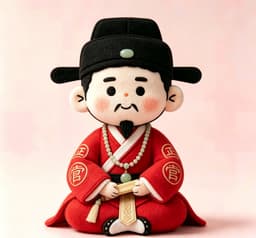
Zhengguan
“Rules aren't your cage — they're your safety.”
You were born with an internal compass — a sense of how things should be done, and a quiet horror at cutting corners. Rules, to you, are not a cage; they're the railing on a long staircase.
- An integrity that makes you impossible to corrupt
- The discipline to do the right thing on the hard days
- A sense of duty that others can build their lives upon
- The rules that protect you can also quietly imprison you
- You shoulder responsibility that was never yours to carry
- You judge yourself by standards you'd never impose on a friend
You love with commitment — you don't drift into relationships, you enter them deliberately. But you can be so busy being responsible that you forget to be present. Your lesson: duty is not the same as devotion.
You are the spine of any institution — management, law, governance, anywhere that needs someone who will show up and do it right for twenty years. You don't need the spotlight; you need to matter.
Stories that sound like you.
You're the friend who's never late, the one who keeps the promise even when it hurts, the one who stays when it would be easier to leave. You don't announce it; you just do it — again and again, quietly, without anyone asking. And because you never make a scene about it, people have started to take it for granted, the way you take gravity for granted. They call you reliable like it's a small thing. It's not. Reliability is the rarest currency there is — rarer than talent, rarer than charm, rarer than luck. The world runs on people who show up. But the world also has a habit of leaning on the pillar until it forgets the pillar is made of something that can crack. In the Ten Gods, this is Zheng Guan (正官) — the energy of duty, discipline, and the quiet honor of keeping your word. It is the backbone of the chart, the part that holds things together because someone has to. It is also the part that never asks for help, because asking feels like failing the very thing people count on you for. Here is the reframe. Being the strong one doesn't mean you can't need a hand — it means you're strong enough to know when to take one. The pillar gets tired too, and a pillar that never rests is a pillar that eventually falls on everyone it was holding up. So let someone hold you up once in a while. The people who love you are not keeping score; they're waiting for the chance to return even a fraction of what you've quietly given. You don't have to earn rest. You've already paid for it, a hundred times over, in the showing up.
You've spent your life doing things the right way. Following the path, meeting the expectation, keeping the peace. You got the grades, you took the job, you said the right thing at the right time. You followed the rules — and the rules have given you a life that looks, from the outside, exactly like it's supposed to look. But somewhere along the way, you started asking a question you can't quite put down: whose rules are these, anyway? Who decided that this job, this schedule, this way of being was the measure of a good life? And if you never chose any of it — did you? In the Ten Gods, Zheng Guan (正官) is the energy of order, law, and structure — the part of you that respects rules so deeply it sometimes forgets rules are made by people, and people are fallible. You were handed a rulebook before you could read, and you've been following it so long you forgot it was ever handed to you. Here is the reframe: that question — "whose rules are these" — is not a betrayal. It's the beginning of your life. You don't have to burn the whole rulebook down. You just get to read it with your own eyes, keep what builds you, and quietly set down what was only ever someone else's fear wearing a suit. The people who truly love you don't want the version of you that obeys. They want the version that chooses. Start with one rule you've been following out of habit, and ask it directly: did I choose you? The first honest answer will open the door to all the rest.
Everyone thinks being the responsible one is easy. It's not. It's carrying a quiet, constant anxiety that if you slip once — one missed deadline, one dropped promise, one moment of not being enough — everything you've built comes apart. So you hold yourself to a standard no one else can see, and you punish yourself for every millimeter you fall short. You've probably never said this out loud, because saying it would mean admitting you're tired, and you've decided that's not allowed. But you are tired. Deep down, all the way through. In the Ten Gods, Zheng Guan (正官) carries the weight of standard and reputation. It wants, more than anything, to be good — and "good" has a way of expanding until it means "perfect," until it means "never disappointing anyone, ever." That's not a standard. That's a cage. Here is the reframe: you do not have to be perfect to be good. You can disappoint people and still be loved. You can rest and still be enough. The world does not fall apart when you take a night off — you were never the only thing holding it together, no matter how much it felt like it. Try this: do one thing this week that is good for you and slightly disappointing to someone else. Feel the fear, do it anyway, and watch the sky not fall. That's how you learn, in your body, what your mind has never believed — that your worth was never measured in your usefulness. You were enough before you did a single thing right.
You're the steady one. The one people call when things fall apart, the one whose name comes to mind when something important needs to be done right. You absorb other people's panic, solve their problems, carry their weight on top of your own — and you do it so smoothly that no one ever thinks to ask what's happening underneath. So you've learned to go quiet about your own storms. Because if you admit you're struggling, what happens to everyone leaning on you? You've built an entire identity around being the load-bearing wall, and the wall isn't allowed to ask for help. In the Ten Gods, Zheng Guan (正官) is the authority and support energy of the chart — the part that others instinctively trust to hold things together. That trust is a gift. But it comes with a hidden trap: the more reliable you are, the less anyone believes you could possibly need something yourself. You get treated like infrastructure — essential, and invisible. The reframe: being the strong one and being human are not mutually exclusive. You can be someone's rock and still need a rock of your own. Admitting you're tired does not make you less reliable — it makes you honest, and honesty is the only foundation that doesn't eventually crack. So the next time someone asks how you are, tell them the truth. Not the whole truth, not all at once — just enough to let someone else hold a corner for a change. You'll be surprised: the people who love you have been waiting to be useful to you, the way you've always been useful to them.
Before you speak, you rehearse. Before you act, you run the scenarios. Before you commit to anything, you map out every way it could go wrong, and then you map out the ways you'd fix each one. It isn't laziness — you work harder than almost anyone. It's fear. A deep, unnamed fear that one wrong move will undo you, that a single mistake will be the thing people remember. So you play it safe. You color inside the lines, you choose the guaranteed thing, you stay in the job and the life that feel secure even when they've stopped feeling like yours. In the Ten Gods, Zheng Guan (正官) is deeply attached to correctness — to doing things properly, to maintaining face and reputation. That instinct protects you. But left unchecked, it turns every decision into a test you can't afford to fail, and a life spent avoiding mistakes is a life spent avoiding life. Here is the reframe: the people who succeed are not the ones who never made mistakes. They're the ones who made them, learned, and kept moving. Every version of you that matters — the confident one, the brave one, the one who took the leap — exists on the other side of a mistake you haven't made yet. So make one. A small, survivable one, on purpose. Watch the world not end. Because here's the secret no one told you: you have survived every mistake you've ever made, and you will survive the next one too. The only true failure is letting fear of falling keep you standing still.
You did everything you were supposed to. You got the education, you landed the respectable job, you built the stable life, you hit every milestone on schedule. From the outside, you are the success story — the one people point to and say, see, that's how you do it. And you smile and nod, because that's what the script requires. But inside, there's a hollow place you can't seem to fill. A sense that somewhere along the way, between meeting expectations and keeping the peace, you lost the thread of what you actually wanted. You built the life you were told to want, and now you're standing in it, wondering whose life this even is. In the Ten Gods, Zheng Guan (正官) governs achievement and propriety — the drive to succeed, to be respected, to do things correctly. It is a powerful engine. But an engine running on other people's fuel eventually sputters, no matter how far it's traveled. You've been running on borrowed goals. The reframe: the emptiness isn't a sign that you're broken. It's a signal that it's time to ask the question you've been avoiding — what do I actually want, separate from what I was supposed to want? That question feels dangerous, because it threatens the life you built. But the life you built won't fall down from one honest question; it might finally start to feel like yours. Start small. Find one thing — one activity, one interest, one old dream — that you genuinely love for no reason other than that it lights you up. Protect it. Give it time. You don't have to burn the life down. You just have to start putting yourself back into it.
You love the way you do everything else: seriously, steadily, with your whole self behind it. You show up, you provide, you protect, you stay. You would walk through fire for the people you love — and you'd do it silently, because saying the words out loud feels like a kind of exposure you've never learned to survive. So you express love through actions and hope it's enough. Through being reliable, through fixing things, through being there. And then you watch, quietly hurt, as the people you love say they don't know how you feel — because you've never actually told them. In the Ten Gods, Zheng Guan (正官) loves with restraint and duty. It is deeply loyal, but it expresses that loyalty through obligation and structure rather than open tenderness. The feeling is there — enormous, steady, real — but it gets translated into "I'll handle it" instead of "I love you." The reframe: the people who love you are not mind-readers. They can't feel what you never say. And here's the harder truth — withholding your words doesn't protect you, it just starves the people who need to hear them. Love expressed only through action is love they can see but never quite hold. So say it. Once, clumsily, even if your voice shakes. "I love you." "I'm proud of you." "I missed you." Start with the person it's easiest with, and work your way up. The words won't undo you — they'll unlock the very thing you've been building all this time. You've already been loving them. Now let them hear it.
You are the designated responsible one. The sibling who handles the parents, the friend who organizes everything, the colleague who quietly fixes what others break. People hand you their problems without a second thought, because you've never once dropped one. You catch, you solve, you smooth, you absorb — and it never occurs to anyone that you might be carrying your own load underneath all of theirs. And the truth is, you are. A heavy one. One you never talk about, because there's no room — because everyone else's crisis is always more urgent, and you've trained yourself to believe your own struggles can wait. In the Ten Gods, Zheng Guan (正官) is the burden-bearer of the chart. It shoulders duty, manages crisis, and protects the people around it. This is a noble thing. But nobility without boundaries becomes martyrdom, and a martyr, eventually, is just someone who's poured out everything and left nothing for themselves. The reframe: you are not responsible for everyone, all the time. That belief was handed to you, not chosen. The people who love you would be horrified to learn what you carry silently — and they would want the chance to carry some of it with you, if only you'd let them. So this week, put one burden down. Not the urgent one — the one that was never yours in the first place. Say no once, and let the world figure it out without you for an hour. It will. And you'll remember, maybe for the first time in years, that you are a person too — not just the person who holds everyone else up.
You made the sensible choice, and you'd make it again. The stable job, the steady paycheck, the safe path — because someone had to, because security matters, because you saw what happens to people who gamble everything and lose. You built a life that works, and you're proud of it, mostly. But on certain nights, when it's quiet, you let yourself wonder about the other life. The risk you didn't take, the leap you talked yourself out of, the wilder version of you that stayed buried under the responsible one. And the wondering doesn't mean you're unhappy — it just means you're human. In the Ten Gods, Zheng Guan (正官) gravitates toward order and safety. It values the certain over the possible, the proven over the promising. That instinct has protected you, and it's not wrong. But it also has a cost, and the cost is the quiet grief of roads not taken. The reframe: choosing stability doesn't mean the other door is locked forever. You don't have to abandon the safe life to touch the wild one. You just need to stop treating them as a binary — because the richest lives are built by people who kept the steady foundation and still let themselves reach for one thing that scares them. So take one small risk. Not the reckless one — the meaningful one. A class, a project, a conversation you've been avoiding. Feed the version of you that wonders. You don't have to choose between safe and alive. You get to have both — one steady foot, one foot reaching.
You've spent your life becoming what was required. The responsible child, the reliable friend, the competent professional, the steady partner. You slipped into each role so naturally that no one — least of all you — ever stopped to ask whether any of it was what you wanted, or whether you were just very, very good at doing what was needed. And now, standing in the life you built out of everyone's expectations, you've hit a strange and lonely question: if I strip away all the roles — the titles, the duties, the ways people count on me — what's left? Who am I, actually, when no one needs anything? In the Ten Gods, Zheng Guan (正官) is the energy of duty and reputation — it is exquisitely good at becoming what others require. That adaptability is a gift, but it can also become a forgetting. You've been everyone's answer for so long that you forgot to keep asking your own question. The reframe: you are not the sum of what you provide. Beneath the roles is a self that was there before any of them — and it has preferences, wants, and a voice you've been too busy to hear. Finding it again isn't selfish; it's the one project that actually belongs to you. So start asking, gently, what you like. Not what's useful, not what's expected — what you like. Small things first: a food, a place, a time of day, a thing you'd do if no one was watching. Follow them. They'll lead you back to the person who was there all along, waiting to be introduced to the life you've been living in their name.
“Order is not your cage — it is the skeleton on which you walk through the world.”
Zhengguan is the part of you that keeps things in order. Not because anyone is watching — but because a world with rules simply feels safe to you. It is your built-in sense of responsibility, fairness, and self-discipline: the quiet voice that says keep your word, do the right thing, show up on time.
The Cognitive Awakening Course
“Know your energy. Awaken your life.”
You’ve met your archetype. Now learn to work with it — turn self-knowledge into a life you actually live.