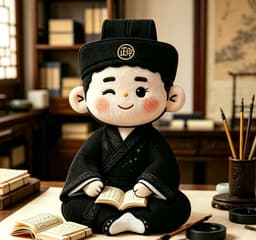
Zhengyin
“You see a layer of the world that others miss.”
You see a layer of the world that others miss. Where people see noise, you see pattern; where they see information, you see meaning.
- A mind that learns quickly and keeps learning
- Compassion that others feel as safety
- Wisdom that comes from reflecting, not just reacting
- You give so steadily that you forget to receive
- You can disappear into caring for others and lose yourself
- Your gentleness can be mistaken for permission to take advantage
You love by understanding — listening, remembering, anticipating. But you sometimes love so selflessly that you vanish. Your lesson: the people who deserve you are the ones who ask how you're doing, and wait for the answer.
You flourish in work that feeds the mind and heart — teaching, writing, healing, scholarship. You need meaning, not just money; a paycheck without purpose will slowly drain you.
Stories that sound like you.
People bring you their confusion and leave a little clearer — not because you solved it for them, but because you helped them see it. You listen without rushing, you remember the detail they mentioned three weeks ago, you ask the question that gets to the thing they were really circling. It's a quiet gift, and it's why people keep finding their way to you, even strangers, even when you never asked to be anyone's safe place. You've probably never thought of it as a skill. It's just how you are — the calm in the storm, the steady voice, the person who makes the world feel less loud. But make no mistake: that gentleness isn't softness. It's the composure of someone who has read widely, listened deeply, and lived carefully. In the Ten Gods, this is Zheng Yin (正印) — the energy of wisdom, compassion, and quiet refuge. It is the part of the chart that soothes, teaches, and protects. It is why people feel safe with you. It is also why they sometimes forget that you, too, need a place to land. The reframe: you were not put here to be everyone's harbor and no one's home. The people who deserve you are the ones who ask how you're doing — and actually wait for the answer. Those are the ones worth your energy. The rest can visit, but they don't get to stay. So keep being the person people come to. It's a beautiful thing to be. Just save the deepest version of yourself for the people who come not to be soothed, but to know you. They're rarer, and they're the ones your gentleness was really meant for.
Where other people see noise, you see a pattern. Where they see scattered facts, you see the thread that connects them. Your mind doesn't just collect information — it arranges it, finds the shape underneath, understands how one thing explains another. You've probably been doing this since you were young, seeing things about people and situations that others took years to notice, if they ever did. It's a rare and powerful gift. But it has a cost you don't often name: because you understand people so well, you can't help carrying more than your share of their weight. You see why they act the way they do, so you excuse it. You feel the shape of their pain, so you absorb it. You become the quiet guardian no one asked you to be, and no one relieves you of. In the Ten Gods, Zheng Yin (正印) is the energy of insight and understanding — it perceives deeply, connects broadly, and comprehends what others miss. This is the mind of a scholar, a healer, a counselor. But a mind that understands too much can start to hold everyone else's story at the expense of its own. The reframe: understanding is not the same as responsibility. You can see exactly why someone is the way they are — and still not be obligated to fix it, carry it, or absorb it. The clarity is yours; the burden is not. Put down what isn't yours to hold. Keep seeing the patterns. It's your gift, and the world is starved for people who can. Just remember you get to be a person too, not just a set of eyes that understands everyone else. You can't be everyone's quiet guardian and never rest. Even the wisest need to be seen, not just to see.
People read your kindness and assume you'll bend. They mistake your softness for a lack of spine, your patience for permission, your willingness to listen for a willingness to be walked over. And so they push — a little at first, then more — waiting for you to cave the way they've decided gentle people always do. But they're wrong about you, and eventually they learn. Because you don't argue loudly — you simply don't move. There is steel under your softness, a line you won't cross, and the people who test it discover, usually too late, that your gentleness was never weakness. It was a choice. And a person who chooses gentleness is stronger than anyone who's merely never had a reason to be harsh. In the Ten Gods, Zheng Yin (正印) is quiet strength — it is compassionate without being fragile, firm without being cruel. It holds its ground not by shouting, but by being immovable where it matters. The gentlest water carves the hardest stone, and it does it without raising its voice. The reframe: your gentleness is your strength, not your flaw — keep it. But make sure you're not the only one in your life giving it. Kindness that only ever flows outward, and never back, is a slow emptying. You are allowed to need the same softness you give so freely. So hold your line, and hold your gentleness. The people who deserve you are the ones who treat your softness with care, not as a weakness to exploit. Keep being kind — but be kind to yourself first, and let the rest of the world earn the rest.
You are someone who learns. Not for a test, not for a credential, but because understanding things genuinely satisfies something deep in you. You read, you ask questions, you collect knowledge the way others collect objects — carefully, over years, without fanfare. And somewhere along the way, you became the person others come to when they need to understand something. It's a quiet power, and you don't advertise it. But make no mistake — it's real. In a world that rewards the loud and the fast, you've built something slow and deep: a mind that actually knows things, that can see clearly, that isn't swayed by every passing panic. That's a fortress no one can take from you. In the Ten Gods, Zheng Yin (正印) is the energy of learning and scholarship — the hunger to understand, the patience to study, the gift of turning knowledge into wisdom. It is the most durable form of wealth in the chart, because while money and status can be lost, what you know — and how you think — stays with you forever. The reframe: your knowledge isn't just a comfort; it's your edge. But it only protects you if you trust it. You've spent years learning; now spend a little time trusting that what you know is enough to act on. You don't need to read one more book before you make the move. You're already ready. Keep learning — it's who you are, and it's beautiful. But remember that knowledge becomes wisdom only when it's used. Your quiet fortress isn't just for hiding in. It's for standing on. Step out of it, and let the world see what you've quietly built all these years.
You can't help it. When someone you love is hurting, you hurt too. When a friend is anxious, your stomach tightens. When a stranger tells you a sad story, you carry it home with you and can't put it down. You absorb the emotional weather of every room you walk into, and by the end of the day, you're exhausted in a way that has nothing to do with what you actually did. People call you empathetic, and it's true. But they don't see the cost. Empathy like yours isn't just understanding someone's pain — it's feeling it, in your own body, as if it were yours. And no one ever taught you how to feel it without drowning in it. In the Ten Gods, Zheng Yin (正印) is deeply compassionate energy — it soothes, it absorbs, it cares. But its shadow is exactly this: an open heart with no boundary, a sponge that soaks up everyone's suffering and never gets wrung out. Compassion without limits isn't kindness. It's a slow, quiet self-destruction. The reframe: you can care deeply without carrying everything. The line between empathy and engulfment is a single, learnable skill — noticing the difference between "this is theirs" and "this is mine." You can sit with someone's pain, honor it, and still hand it back to them at the end, because it was never yours to keep. So practice the boundary. Before you absorb, ask: is this mine to carry? More often than not, the answer is no. You can be a good friend and a compassionate person without becoming everyone's emotional sponge. Protect your heart. It's the very thing that lets you be soft for the people who need you — and you can't pour from it if it's empty.
There's a particular warmth that comes from being needed. When someone turns to you for help, for comfort, for the answer only you seem to have — it fills something in you, makes you feel valued in a way nothing else quite does. And because you're good at it, because you're calm and wise and safe, people keep turning to you. More and more of them, all the time. But there's a line between being needed and being used up, and somewhere along the way you crossed it without noticing. Now the need never stops — the late-night calls, the constant crises, the expectation that you'll always be the steady one — and you're running on empty, too proud or too kind to say "I can't be everything for everyone right now." In the Ten Gods, Zheng Yin (正印) gives generously of its calm and wisdom — it is the natural helper, the one people lean on. That's a noble role. But a helper who's never refilled becomes a hollow version of themselves, and eventually the help stops being given and starts being extracted. The reframe: being needed is not the same as being loved, and it's not the same as being okay. You have to learn to say no — not because you don't care, but because you can't keep caring if you never rest. The people who truly love you will understand, and the ones who don't were never really loving you; they were just using your steadiness. So this week, say no to one thing. Watch the world not fall apart. Then say no again, and again, until "helping" feels like a choice you make rather than a role you're trapped in. You are not a bottomless well. You are a person, and you get to reserve some of yourself for yourself.
You see the good in people, even when they're not showing it. You understand why they are the way they are — the childhood, the wounds, the reasons behind the behavior. So when someone hurts you, you make excuses for them before they even ask. You forgive, and forgive, and forgive, because in your heart, walking away feels crueler than staying, and you could never be the one who gives up on someone. But there's a cost to that mercy, and you're paying it. The understanding that should protect you has become the thing that keeps you stuck — always seeing their side, never defending your own, until "compassionate" has quietly turned into "walked all over." In the Ten Gods, Zheng Yin (正印) is boundless compassion — it forgives, it understands, it refuses to abandon. This is a beautiful quality, one the world needs more of. But compassion without a backbone isn't love; it's self-abandonment dressed up as kindness. You can understand someone completely and still decide they're not good for you. The reframe: forgiveness doesn't require you to stay. You can forgive someone — truly, from the heart — and still close the door, because forgiving them and protecting yourself are not opposites. They are two separate acts, and you are allowed to do both. So ask yourself the hard question: am I staying because I love them, or because I'm afraid of being the one who left? The answer will tell you everything. Your kindness is real, and it deserves to be aimed at someone who returns it — starting with you. Walking away from what hurts you isn't cruelty. It's the gentlest thing you can do for yourself.
You've noticed it your whole life: just when you needed help, someone appeared. A mentor who took you under their wing, a friend who showed up at exactly the right moment, a stranger whose advice changed your direction. You've always chalked it up to luck, or timing, or just being in the right place. But it happens too often to be coincidence. Here's what's really going on: people are drawn to you because of who you are. Your kindness, your calm, your genuine interest in others — these things create a kind of gravity that attracts good people and genuine help. The mentor didn't appear by accident; they saw something in you worth investing in. The friend didn't show up randomly; they were drawn to your steadiness. In the Ten Gods, Zheng Yin (正印) is the energy of benefactors and support — the贵人 in the chart, the people and resources that arrive to help. But here's the part people miss: the benefactors come because of what you put out. Kindness attracts kindness. Wisdom attracts those who value wisdom. You've been quietly earning your good fortune for years, through who you are. The reframe: it's not luck — it's you. And because it's you, it will keep happening as long as you keep being you. So don't hoard the help, and don't doubt your worthiness of it. When good people show up, receive them with gratitude, and pay it forward when you can. Keep being the person others want to help. That's a real form of wealth, and it compounds. The world helps those who help, who listen, who care. You've built that reputation one quiet kindness at a time. It's not luck. It's the harvest of a good life, and you've earned every bit of it.
You've never been good at the game. The politicking, the self-promotion, the maneuvering for position, the flattery that gets people ahead. It's not that you can't do it — you just won't. It feels dishonest, beneath you, a betrayal of the way you believe people should treat each other. So you stay quiet, do good work, and trust that it'll be noticed. And sometimes it isn't. You've watched louder, flashier people get promoted past you. You've been passed over, overlooked, told you're "too nice" to compete. And there are moments you've wondered whether your refusal to play the game is noble — or just naive. In the Ten Gods, Zheng Yin (正印) carries a deep sense of principle — it values integrity over advantage, substance over show. It will not debase itself for a win. This is a strength, and in a world drowning in manipulation, it's becoming rarer and more valuable by the day. But principle without strategy can leave the principled person invisible. The reframe: you don't have to become ruthless to be seen. You just have to learn to let your good work be known — not through self-promotion, but through honest visibility. There's a difference between bragging and simply not hiding. The world can't reward what it never finds out about. So start letting people see what you do. Share the win, name the contribution, speak up in the meeting where you'd usually stay quiet. Not to play the game — to stop handing it to the people who do. You can keep your integrity and still be seen. In fact, the world needs principled people to be more visible, not less. Step into the light, on your own terms.
You don't chase. You don't grab. You don't push your way to the front or fight for the spotlight. While everyone around you scrambles and strategizes, you stay steady — doing the work, keeping your word, being the same person on the inside as you are on the outside. And there are times you've wondered if that's enough, watching the loud and the hungry pass you by. But look closer, and you'll see what's actually happening. The people who sprint burn out; the ones who scheme get found out; the ones who shout eventually run out of breath. And you — the steady one — are still here, still trusted, still whole. The people who matter have learned, over years, exactly who they can count on, and it's you. In the Ten Gods, Zheng Yin (正印) is the energy of stillness and depth. It doesn't need to move fast because it moves true. It wins not by force but by constancy — the slow, certain accumulation of trust and character that no shortcut can fake. In a world of noise, the quiet steady person becomes the anchor everyone else eventually ties to. The reframe: your stillness is not passivity — it's a different kind of power, and it compounds. Keep being the same good person on the hard days and the easy ones. Keep doing the work when no one's watching. That constancy is building something the sprinters will never have: a reputation that can't be taken away. Don't confuse quiet with invisible. The people who need to see you, do. The opportunities that are meant for you, will come. You don't need to shout to matter. You just need to keep being you, day after day. Stillness, held long enough, becomes the strongest force in the room.
“Everything you absorb will eventually become your foundation.”
Zhengyin is the part of you that absorbs. Not the accumulation of facts, but an inborn power of taking in — the way rich soil drinks the rain. You turn information, knowledge, and experience into depth, quietly, the way a sponge soaks up water until it is full.
The Cognitive Awakening Course
“Know your energy. Awaken your life.”
You’ve met your archetype. Now learn to work with it — turn self-knowledge into a life you actually live.